





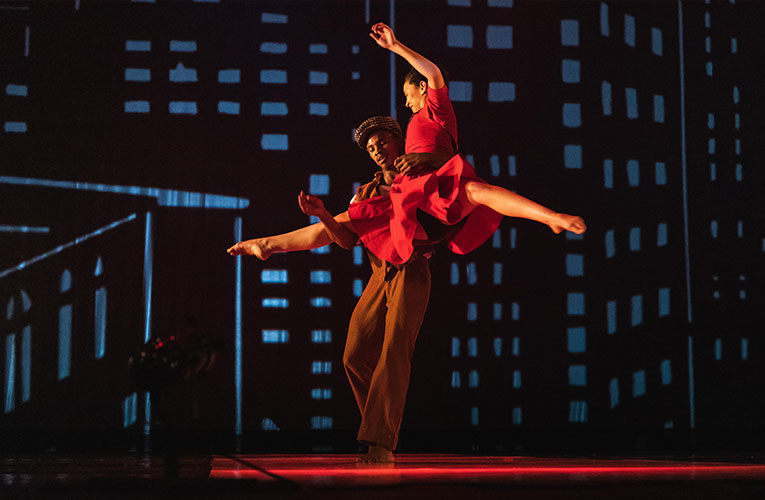
We are Still Marching: Dancing to raise awareness about women’s struggles and celebrating them
By Edward Tsumele, CITYLIFE/ARTS Editor
As human beings we all love the art of dance, its aesthetics and the passion and the energy that dancers exude once they are on stage. And of course we often also admire their state of fitness and perhaps deep down we also feel like we are one and the same with them on stage until the show ends, lights go on and we start applauding them for a job well done. That is though if the dancers have done well and the choreographer has been good in arranging the dance sequences.
That is one purpose of dance among many other purposes. However there is a deep purpose of dance and it is not always amusing to watch as dance can also be used to raise disturbing contemporary issues in society using the art of motion. Because dance is visual and it is a silent language, it does not mean that it is actually silent on articulating issues it is aimed at tackling.
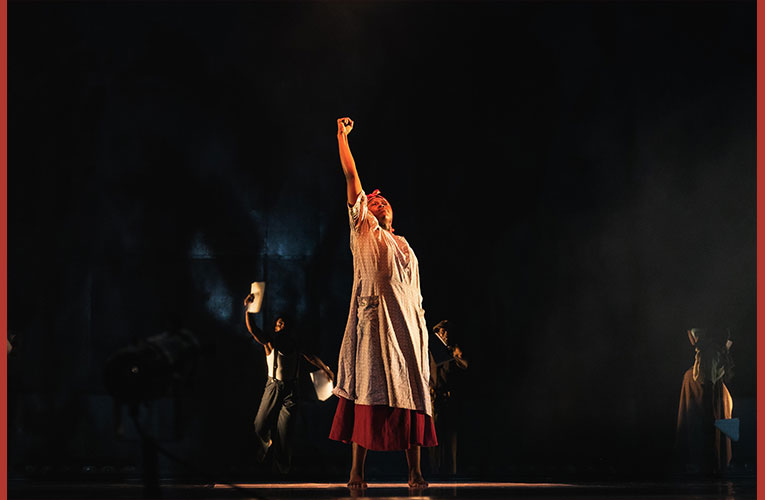
Those who will be lucky enough to attend the show Wd are still Marching, a dance production by moving into dance will experience a piece of work that is raising an important issue in South Africa right now, which is the marginalization of women and their roles in society. And this marginalization takes main forms. Disturbingly the commonest of them these days being the abuse of women and muting their voices in spaces where patriarchy has claimed such spaces belonging to it. Such spaces as in the boardroom, academia, media, politics and religion for example till this day remain problematic for women in general.
This is happening right now, but in fact the women’s struggle has always been there spanning the dark apartheid days, and disappointingly continuing in post apartheid South Africa.
We are still Marching is therefore is a production that attempts to link the women’s struggles during apartheid and right now. However the production has chosen a new narrative about women’s struggles to have their voice heard instead of being muted by the noise coming from elsewhere.
This narrative in We are still Marching is that of celebrating the women and their attributes and achievements in the middle of these difficulties and challenges.
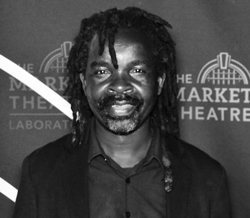
Choreographed by one of the most important voices in the art of dance, Sonnyboy Motau, whose choreographic credits span the several dance stages of South Africa and internationally, Motau is choreographing this piece of dance significantly his first since he was appointed to the influential position of Associate Choreographer at Moving Into Dance.
Moving into Dance is an iconic contemporary dance outfit whose genesis is from the dark days of apartheid when its founder Sylvia ‘Magogo’ Glasser, defied apartheid laws and started a multi-racial dance company in her house in the northern suburbs of Johannesburg. Mixing between blacks and whites even in the arts were deemed illegal then.
The company today is still moving and is credited with producing almost all the contemporary dancers in South Africa through its dance fusion classes from its Newtown based premises. Magogo is retired and is enjoying her retirement in Australia, but the seed she planted is still growing and thriving today, despite the difficulties for arts institutions in the country. Arts institutions and companies today in South Africa are facing many challenges that range from dwindling corporate and public sector funding for the arts to now Covid-19. The arrival of Covid-19 in 2020 meant that the ability for artists to conceptualise and put up shows has been constrained by both recurring restrictions related to lockdowns and the lack of funding as budgets have been reprioritized , shifted to elsewhere
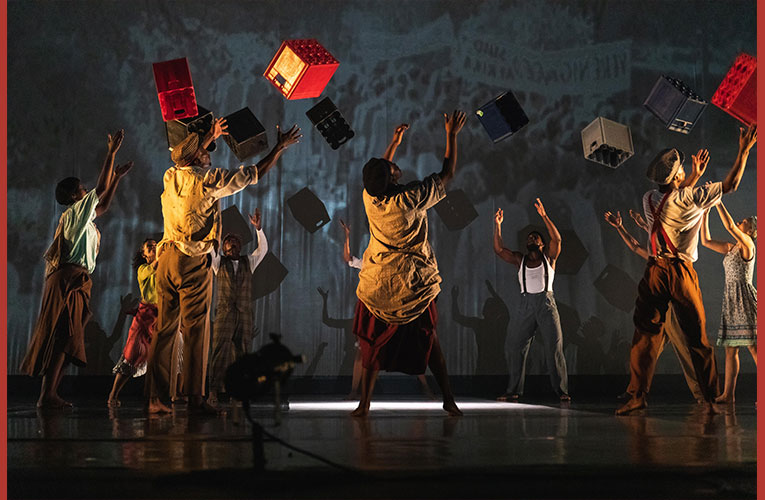
However We are still Marching, which is touring Gauteng, starting at the Sate Theatre In Pretoria on February 10, 2022, before touring KwaZulu-Natal and eastern Cape, has been enabled by funding from the Department of Sport, Arts and Culture through its Mzansi Golden Economy programme.
Now lovers s of the beautiful art of dance in the three provinces will be happy to know that emerging from the live performance hiatus dictated by the Covid-19 pandemic, Moving into Dance Trust is back on stage with Motau’s work, We are Still Marching
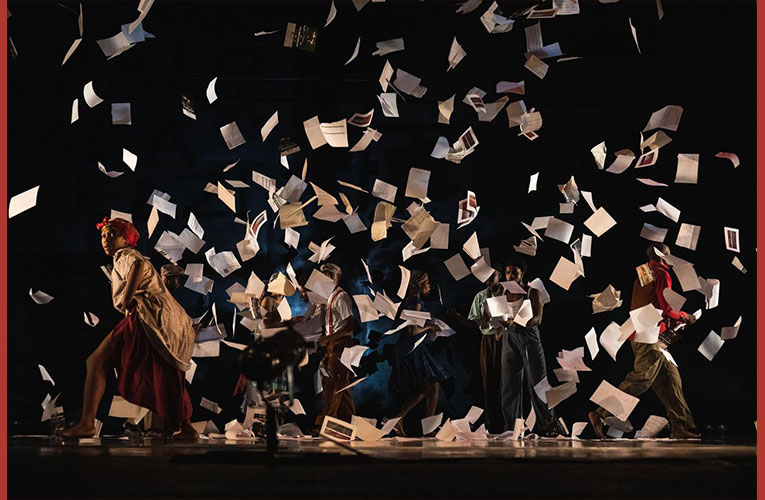
Originally commissioned by The Playhouse in 2016, We are Still Marching explores the struggles faced by women in Southern Africa from the apartheid era until present day. It is a reminder of incidents such as the Women’s March of 1956, the bus boycott and the recent mass campaigns: #FeesMustFall, #metoo and #thetotalshutdown highlighting the fact that even 24 years after the first democratic elections in South Africa, the struggle continues and women are still marching.
“Moving into Dance is thrilled to be performing in theatres again. We are grateful to the Mzansi Golden Economy Fund for making it possible for us to perform a work that speaks to the struggle that women continue to face.
“Despite the advancement of technology, there is still a lack of advancement in perceptions around women’s rights, the value they add to the social and professional spheres and their impact globally. Women continue to march as they did in 1956,” states Moving into Dance’s CEO, Nadia Virasamy.
We Are Still Marching is a magnificent celebration of women, their lives and their commitment, and promises an exciting, unforgettable experience for all lovers of dance.
It is a privilege to bring live dance back to our audiences, especially with a work like this,” says choreographer Motau.
“Not only does We Are Still Marching honour the stalwarts of the women’s struggle such as Lillian Ngoyi, Helen Joseph, Rahima Moosa, Sophia Williams-de Bruyn, Motlalepula Chabaku, Bertha Gxowa and Albertina Sisulu, who led the 1956 march of 20 000 women to the Union Buildings in Pretoria to protest the carrying of pass books, it also acknowledges the many women who are still marching, facing the struggle head on,” he continues.
The first leg of the tour kicks off at the South African State Theatre from 10 – 12 February 2022. Before heading off to KZN for a run at the Playhouse from 17 – 19 February. The tour ends with performances in Makhanda (Grahamstown) at the Guy Butler Theatre on 24 and 25 February.