

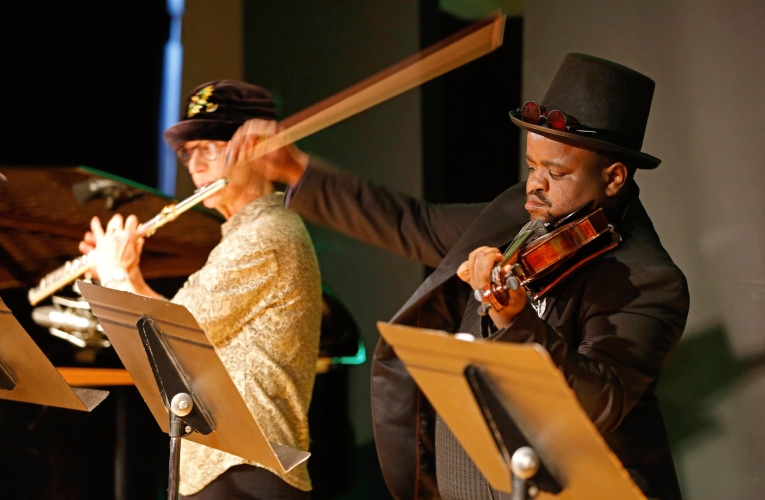
Why looking for the best thing on the Fringe Festival is a wise move, instead of only restricting your search for excellence to the main programme
Artists interested in applying can find full details and submission guidelines on the National Arts Festival’s website www.nationalartsfestival.co.za Applications close on 8 November 2026 at 23h59 SAST.
By Edward Tsumele, CITYLIFE/ARTS Editor
In terms of festival terminology, the Fringe is a festival, which happens on the side lines of the main festival, often underfunded and selection of shows, if it exists at all, is not necessarily based on artistic merit but other factors.
Sometimes the Fringe Festival, may have no relationship to the Main festival, but happens close to the main official festival, often organised to showcase productions that do not, for one reason or the other, make it to the main festival programme.
Sometimes, the Fringe could even be called a counter festival to the main festival. Think of Africa Basel, which was launched last year in Switzerland, featuring, as the name implies, predominantly contemporary art from Africa.
I recently met the co-founder of Africa Basel, Benjamin Fuglisterat the opening of Thato Toeba’s solo exhibition at Johannesburg Art Gallery, where the artist exhibited their works as last year’s winner of the FNB Art Prize, under the auspices of the FNB Art Joburg, which took place a week and half ago, ago at the Sandton Convention Centre.
“We founded Africa Basel, as a Fringe of Basel Art Week, because we felt that Art Basel is not inclusive enough,” Fuglister shared with CITYLIFE/ARTS, the reason why the art fair exists.
The Africa Basel fair took place from June 17 to June 21, 2026, on the side lines of Basel Art Week, the main art fair that takes place every year in that part of Switzerland, featuring mainly art from the Global North, while art from the Global South, if included at all, is pushed to the side lines, effectively pushed to the fringe as a sort of footnote to the art fair.
“Last year was really a proof of concept. It was a test to see whether the idea would work. In that sense, it was successful. We received the right attention, the feedback was very positive, and, importantly, galleries sold works. At the end of the day, if galleries don’t sell, an art fair doesn’t work. What we learned is that our first venue, while incredibly charming, was too limited in terms of space. Larger works simply couldn’t be presented properly. So this year we decided to move to a new location that allows for a more spacious presentation and gives us more possibilities,” Fuglister told the publication Mayi-Art, ahead of this year’s second iteration of Africa Basel, which took place in a new venue.
What he is saying here, in fact, is the assumption that Art Basel does not include African art enough in its presentation, and therefore, leaving out a significant body of art created on the African continent, which increasingly has become a significant feature on exhibitions globally. Think of 1:54 in London. Think of AKA in Paris. These are platforms that centre African art in their exhibitions, in response to exactly the exclusionary nature and characters of European and American art platforms, when it comes to including African art in their events.
However being on the Fringe, does not necessarily mean that productions of art works on the Fringe of a main festival, are of inferior quality. In fact many a time, some works of exceptional excellence are found on the Fringe of a main programme of a major art platform.
Locally, the National Arts Festival, that takes place annually in Makhanda, Eastern Cape, has a Fringe Festival. And in the years that I have been attending this festival, some of the most hilarious and impactful shows emerged on the Fringe programme of the festival.
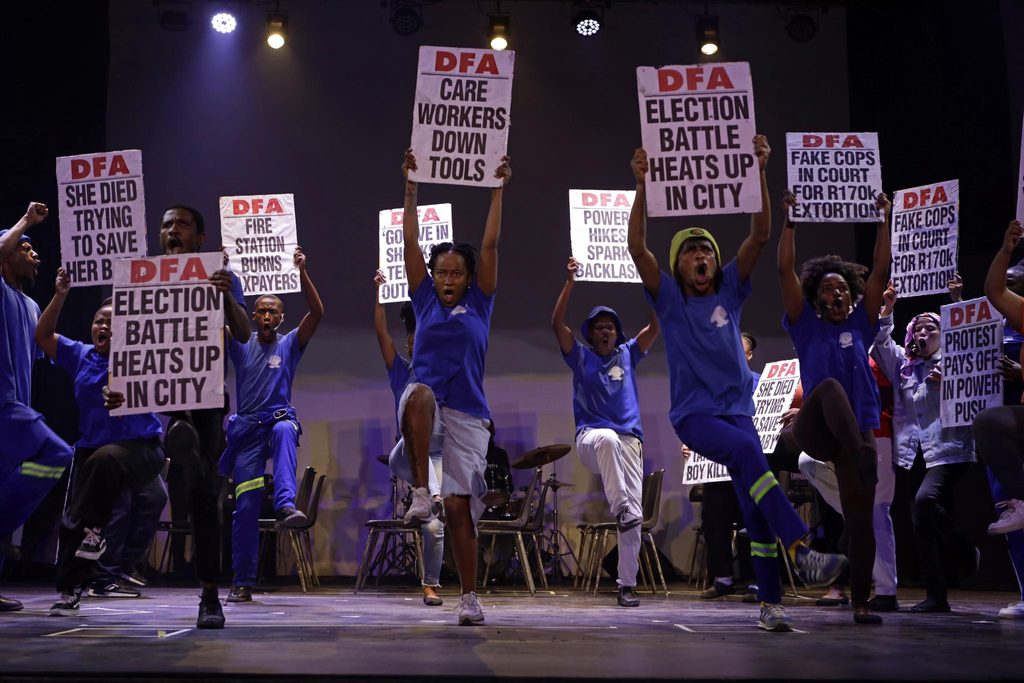
In fact, the fringe has done so well at NAF that in recent years, the organisers of NAF were forced to give the Fringe Festival at NAF, an overdue recognition, through the creation of the Ovation Awards, whereby critics and other theatre experts choose winners on the Fringe. This in fact, is an overdue recognition for the Fringe, which sometimes, is unfortunately mistaken for a space where shows of lesser artistic merit are relegated to.
In fact, this is a big mistake because many a time, word of mouth would spread among festival goers, that they were watching the “wrong” production on the Main Programme, while the really deal was on the Fringe programme. Suddenly a production on the Fringe puts out sold out notices as audiences are drawn in big numbers to that show, instead of those on the main programme.
And so going to NAF, a wise festival goer is strongly cautioned not to ignore shows featured on the Fringe programme of the festival. After all, the best show maybe on that platform, and not always only looking for one on the main programme, is wise during NAF. But gain, some shows need to be on the Fringe, as that spaces gives an opportunity to productions that need to be still polished, an opportunity to test the audience reaction and therefore adjust them accordingly, going forward.
And so, the Fringe is a very important part of the festival ecosystem, and therefore should not be taken simply as a space for less good art that failed to make it to the main programme of the festival, as other factors, other than artistic merit determine who is on the Fringe and who is on the main programme of a festival or art fair for that matter.
Therefore small theatre producers looking for new productions at NAF to put up on their stages after the festival, scour the stages of both the Fringe and the main programmes of a festival, without preconceived ideas of where best to find such talent, I argue.
Call for entries for the Fringe of NAF 2027
.The National Arts Festival has opened applications for its 2027 Fringe programme, inviting artists from across South Africa and around the world to submit work for consideration. Application closes on 8 November 2026.
The call is a deliberately open one. The Festival is looking for work that reflects the full diversity of who is making it and where they are making it from – seeking voices and practices from every corner of South Africa and beyond.
Within that broad call, the Festival is especially keen to hear from artists working at the intersection of new mediums, digital technologies and indigenous knowledge systems. This is work that draws on emerging tools and technologies, pushing new boundaries while remaining rooted in the creative practice, imagination and experimentation. The interpretation of cultural expression, emerging genres or styles, returning and new artists and performers will all be considered.
“The Fringe has always been where the Festival takes its biggest risks on new voices and new ideas,” says Zikhona Monaheng, Associate Producer of the National Arts Festival. “The Fringe has also been the space where the National Arts Festival welcomes the next generation of makers and disruptors and we’re again inviting work that pushes boundaries and blurs lines, work that is joyful, friendly and interesting for young audiences and work that lives outside of theatres and halls.”
Although the Fringe has no artistic selection process, participation is governed by available and appropriate spaces, funding and a balance of works from across the country, including cultural and language diversity.
Artists interested in applying can find full details and submission guidelines on the National Arts Festival’s website www.nationalartsfestival.co.za Applications close on 8 November 2026 at 23h59 SAST.