

A short history of the booming years of music in South Africa: And McCoy Mrubata is in the house
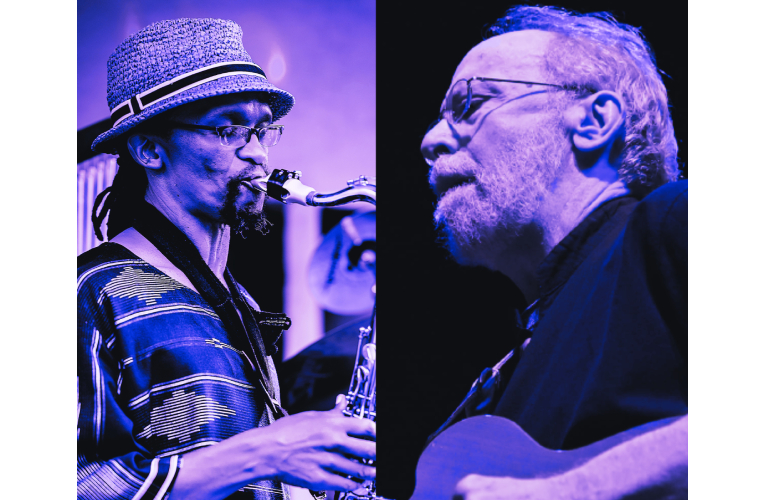
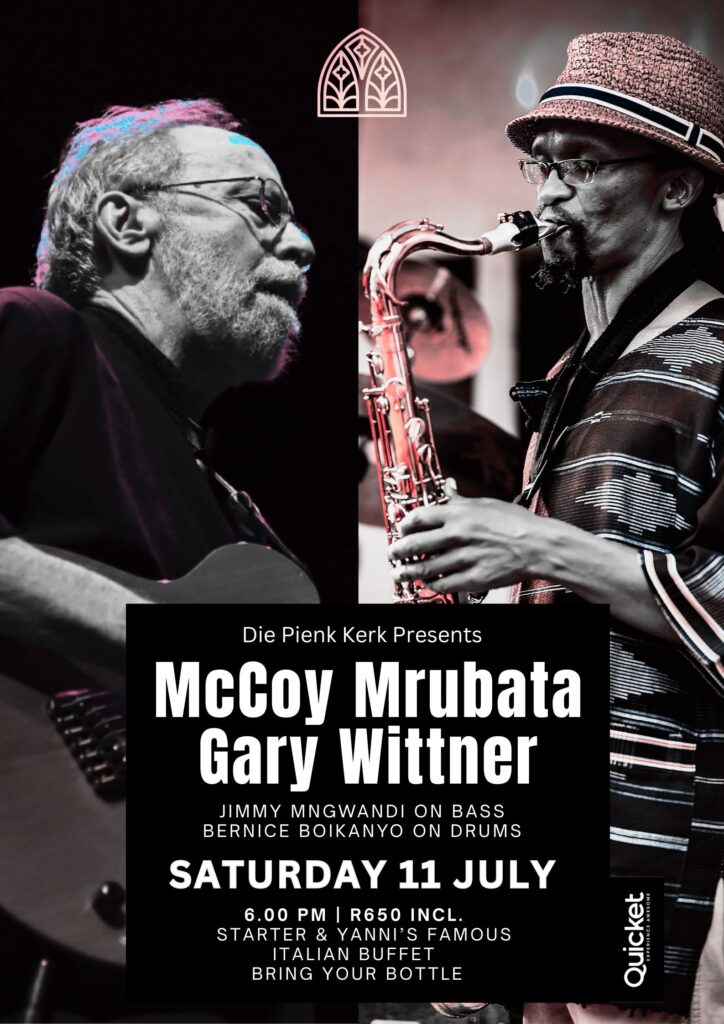
The legendary South African jazz saxophonist McCoy Mrubata and friends have a date with fans in Johannesburg this week – Thursday, 9 July 2026, 19:00 at The Imagination Room, The Factory on Grant, 72 Grant Avenue, corner Nellie Road, Norwood, where he will be joined on stage by Gary Wittner, and on Saturday, 11 July, 2026, Mrubata will be joined by Gary Wittner, bassist Jimmy Mngwandi and drummer Bernice Boikanyo at Die Pienk Kerk, 24 Chatou Rd, Richmond.
By Edward Tsumele, CITYLIFE/ARTS Editor
Well, let me take you back a little bit, on a short, not anymore recent history, of South African popular music. I know it because I was there. Young, energetic and happening, so we thought, as part of that generation, whose music taste was influenced by this particular genre in the main: kwaito.
How could we have not been, when kwaito was, everywhere. In the streets, in the townships and in the clubs of Johannesburg. That time, we witnessed some of our generation of young people, who seemingly overnight, so to speak, transformed themselves from being ordinary, young music fans, into kwaito artists. In that process, they suddenly commanded a huge following, a generation excited by the impending change of government, from a repressive Apartheid government to a democratic government. And these changes were well captured by the hot music genre of the time.
I am talking about the early 1990s, when kwaito exploded in loud Johannesburg clubs. At spontaneously organised loud street parties. There were several bashes taking place at the same time in townships. In Hillbrow. In Soweto. In KwaThema. In Thembisa. In Soshanguve, and literally everywhere, where there was a presence of black youth.
Most of us danced on the dance floor like there was no tomorrow. However, those brave, and maybe, even talented among us, elevated their excitement to a higher level. They moved a notch higher up, from dancing on the dance floor onto the stage.
Strung together some loosely composed short, but punchy lines, and called them lyrics. What they created was definitely short in lyrical content, but was rich in transmitting short messages, inspired by the freedom seen on the horizon. That was the story of kwaito, evolving from a simple sound created by an excited youth of the early 90’s, into a powerful music force that defined and channelled the youth energy from anger to creativity. The result, was kwaito.
It was the time when groups and individuals from all sorts of backgrounds, suddenly exploded on us, having transformed themselves into youth with a purpose and a mission. They called themselves kwaito artists. A sound that fused several influences of the past, blended well with something new, created to mark a new nation. A new beginning. The sound had a captive audience of the youth, with its several variations embraced by all and sundry, with the exception of those with old ears, who dismissed it as shallow something. Not even calling it music. The youth however, enthusiastically embraced kwaito with its several iterations along the length and breath of the country. It was music of freedom to them.
It came complete with its own prophets and prophetesses. Arthur Mafokate, M’du Masilela, TKzee, Boom Shaka, Bongo Maffin, Alaska, Oskido, Abashante, Thebe, you name them. They emerged as brave young people, pioneering a new sound. Making them pioneers of a new sound that in fact, defined the wholke generation. And they captured a captive audience, which at the time, was starting get tired of the previous sound, bubble gum music, that for all practical reasons, whose influence on the youth was receding into the back of their imagination. We warmly embraced these artists without even questioning the depth of their roughly-put-together ‘lyrics,’ accompanied by quite energetic dance moves.
That generation defined youth music. They became celebrities over a relatively short period. They had captured the imagination of the youth, who saw freedom coming from a short distance in the future. Just before the dawn of freedom in 1994, kwaito music was ahead of time, and with its arrival, new stars were born. They were surely replacing the generation of musicians before them. The bubble gum generation who had also invented a new sound in the successive, preceding years.
These stars suddenly became celebrities. Just like the Simunye presenters shortly after. Just like the actors on the country’s first and longest running soapie, Generations. Created by one former exile who had just come back from the US, Mfundi Vundla. Kwaito and the arrival of the phenomenon of celebrity elaborately blended well, forming a new youth culture.
And so, you can imagine what an entertainment journalist, young, energetic and coming from that kind of background, kwaito music and culture, would write about for the newspapers they worked for.
Yes, working for Sowetan, whose entertainment supplement called Time Out, a 12 pager that was published on Fridays as an insert of the iconic daily, gave one access to the hottest musicians and TV ‘celebrities’ of the time. The supplement was so popular that anybody who had just released an album, if not featured in Time Out, had not happened. That was at least in the eyes of its readers come Friday. As a result, so called TV celebrities or musicians, who had not gotten a call from either the late Elliot ‘Bra E’ Makhaya, who was the larger than life Entertainment editor at the time, me, or my colleagues -Mojalefa Mashego, Eddie Mokoena or Ntokozo Gwamanda, for an interview in Time Out, would ask themselves several questions.
In other words, there was a stampede by those who had released a new album or had gotten a new role on the soapie, to want to lead the Time Out supplement of that week, with their managers or publicists relentlessly accosting the writers or the editor to be featured in Time Out. The supplement indeed had clout.
However, there were also other publications that also covered the arts comprehensively. Such as City Press, which sadly closed shop for good in recent months, a victim of the changed media terrain. M&G, with its Friday arts supplement was also popular with artists, and so was The Star with its daily entertainment supplement called Star Tonight, which sadly, has since disappeared over the years. Not to speak about Sunday World, which also had quite an influential arts supplement called Hola (which I also wrote for at some stage in my journalism journey), among others, both provincial and national newspapers.
In other words, the 90’s and early 2000’s, were periods when kwaito boomed all over the country, and the phenomenon of celebrity, especially when it comes to TV actors and presenters, took hold of the imagination of South Africans, particularly the young and happening. There was no social media for one to self-promote themselves as is the case in today’s media landscape dominated by technology enabled platforms. Instead, there was a vibrant independent media that took the arts seriously, and the readers took such media equally seriously consequently.
However, in the middle of all this –that is the kwaito explosion and the advent of celebrity, there was also an emergence of also a relatively popular and powerful explosion of another contemporary sound.
Created by also relatively young, but mature beyond-their age musicians, often either schooled at university music schools, or taught by those experienced in the genre, contemporary jazz enjoyed a parallel boom on the local music scene.
Especially from the mid-2000’s. Concerts and festivals featuring artists, proponents of the Afro jazz genre, were regularly organised. From Moretele to Mabopane, Bassline to Newtown Music Hall, a new breed of jazz musicians emerged, recording and performing everywhere, as promoters interested in promoting jazz also emerged during the same time. There were also a few specialist jazz labels. For example, Melt 2000 and Sheer Sound, recording companies which specialised in recording jazz and African contemporary music.
Names such as Paul Hanmer, the late Mosess Molelekwa, the late Moses Khumalo, the late Zim Ngqwana, McCoy Mrubata, Wessels van Rensburg, Judith Sephuma, Selaleo Selota, Budaza, Jimmy Dludlu, Concord Nkabinde, Jeff Mapaya, the late Busi Mhlongo, the late Sibongile Khumalo, the late Jabu Khanyile, Thandiswa Mazwai, the late Lawrence Matshiza, Vusi Khumalo, Louis Mhlanga, Sylvia Mdunyelwa, Faith Kekana, Wendy Mseleku, Steve Dyer and Marcus Wyatt, among others, were constantly on the lips and ears of those who loved the jazz sound, as well as promoters dedicated to promoting this genre by organising concerts and festivals, where artists playing and recording this genre dominated the line-up.
The adult contemporary and Afro-jazz musicians held their own quite strongly, when it came to both performance and recording music. They were so influential that they added new knowledge and quality sound to jazz that had long been pioneered by big names, such as the late Hugh Masekela, the late Jonas Gwangwa, the late Miriam Makeba, the late Dorothy Masuka, the late Robbie Jansen, the late Phillip Tabane of the Malombo fame, the late Dolly Rathebe, the late Bheki Mseleku, Jonathan Butler, Caiphus Semenya, Abdullah Ibrahim, Sipho ‘Hotstix’ Mabuse, Khaya Mahlangu, and Lettu Mbulu, among others.
It is therefore, not an exaggeration to suggest that, that period, is a special period in South African music and its development. Not only kwaito, hip hop, reggae, house music, DJS and poets, but contemporary jazz musicians and their Afrocentric sound as well.
Unfortunately, in the past 15 years or so, the number of jazz concerts and festivals, have significantly diminished. Venues that used to host jazz concerts have too disappeared. Promising jazz promoters that had come into the fold, are no more there. Their ambitions having been dashed by the lack of corporate sponsorship, among other factors.
This has resulted in only the established jazz festivals remaining standing. Such as the annual Cape Town International Jazz Festival, and the annual Standard Bank Joy of Jazz Festival. Unfortunately, in a matured democracy, we have less, and instead of more opportunities for performance by jazz artists.
It is so regrettable to have been shown what is possible in music development, and yet that possibility remains a mirage in today’s live music landscape, with the biggest victims being live jazz venues as only a few places remain standing today to host live jazz acts.
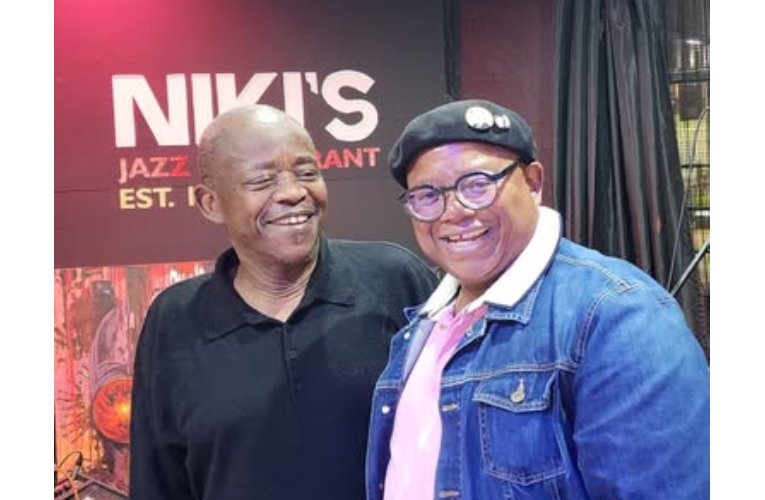
However, encouragingly in Johannesburg, a few new venues hosting mainly jazz bands have emerged in Johannesburg. They include Untitled Basement in Braamfontein, Hugh’s in Braamfontein, Breezeblock in Brixton, and Afrikan Freedom Station in Sophiatown, of course Niki’s in Newtown, whose resilience has becomes the stuff of legend in the history of live music circles, and a few others scattered around the country, with Cape Town having a fair share of such venues. However, these venues are simply not enough to cater for the significant number of jazz musicians active today in South Africa.
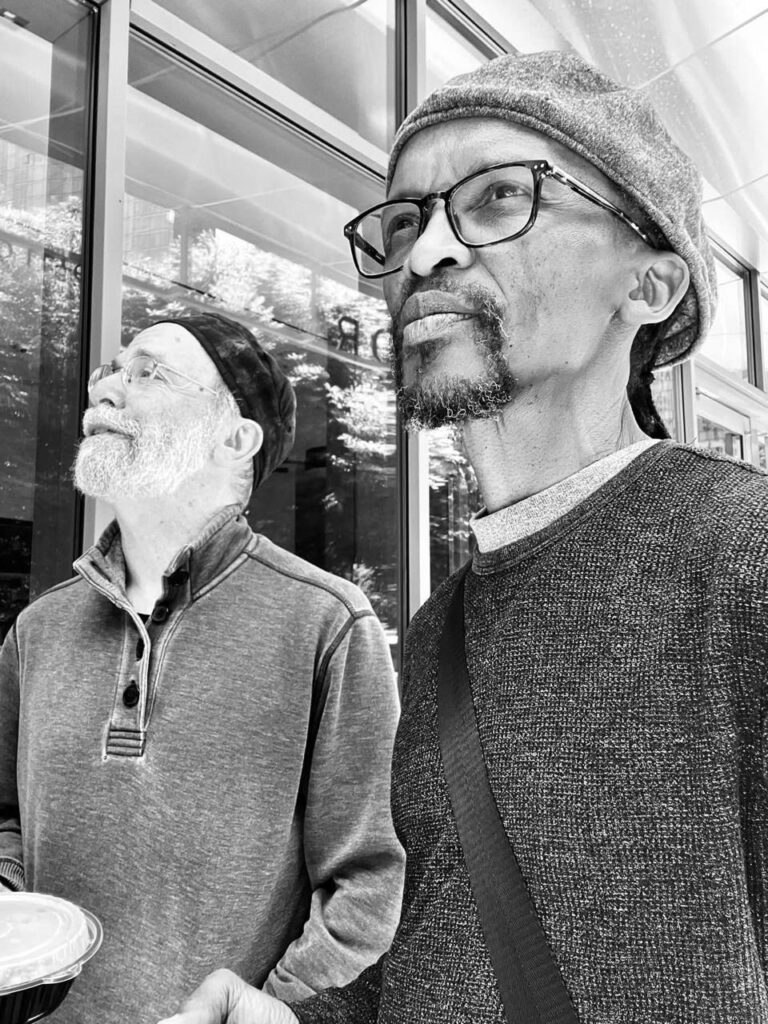
It is with this in mind that I was this week reminded that not all is lost after all, when I received a media release, stating that none other than Mrubata, will be performing at two venues in Johannesburg. I was therefore, reminded of the good old days, when artists in his league, were featured regularly at concerts and festivals. We were indeed spoilt for choice then.
And therefore, fans of Mrubata in Johannesburg, are lucky this week, because the musician, who some years ago, has since relocated from his Johannesburg, back to Cape Town, his home city, is back in Johannesburg for a concert.
This is indeed exciting news in the ears of those who love their jazz. Mrubata is a talented saxophonist, and his shows are always a marvel to attend and enjoy. I have attended so many concerts and festivals over the years, where he has been featured, and I can tell you right now, he always represents his generation of musicians very well. Especially the generation of contemporary jazz artists who dominated the line-up of jazz concerts and festivals during the booming 2000’s.
The legendary South African saxophonist, flautist and composer Mrubata joins acclaimed American guitarist Gary Wittner for an intimate duo performance at The Imagination Room at The Factory on Grant, Norwood, on Thursday, 9 July 2026 at 19:00. The duo’s South African winter tour continues in Johannesburg with a special performance at Die Pienk Kerk in Melville on 11 July, where they will be joined by acclaimed bassist Jimmy Mngwandi and drummer Bernice Boikanyo for an expanded ensemble experience.
If I were you, I was going to attend one of these two shows because they promise to be a memorable experience, especially with Mrubata and his friends in the house.
Event Details
Event: McCoy Mrubata and Gary Wittner Duo
Tickets: R200
Date: Thursday, 9 July 2026
Time: 19:00
Venue: The Imagination Room, The Factory on Grant, 72 Grant Avenue, corner Nellie Road, Norwood, Johannesburg
Bookings: Quicket
Event Details
Event: McCoy Mrubata, Gary Wittner, bassist Jimmy Mngwandi and drummer Bernice Boikanyo
Tickets: R650 – show and 3 course Italian Buffet
Time: Doors open at 5:30pm, performance at 7:00pm
Venue: Die Pienk Kerk, 24 Chatou Rd, Richmond
Bookings: Quicket