





The literary legacy and writing prowess of K. Sello Duiker is celebrated in Johannesburg
Reflecting today, because of his talent and the fact that he died young, critics are not out of line, when they often compare him to other sharp literary minds who were hugely talented and died young. Such as Dambudzo Marechera and Phaswane Mpe, for example.
By Edward Tsumele, CITYLIFE/ARTS Editor
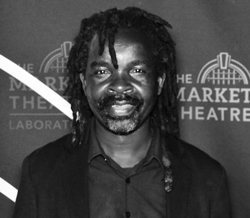
There is a powerful saying in the xiTsonnga language, which goes like this: Mintiro Ya Vulavula. Literally what it means is that work speaks. But, that is only at a superficial level. However, at a deeper level, what it really means is that one does not have to speak for themselves about their capabilities, but prove so through the evidence of their industriousness.
However in the context of the late South African novelist, Sello Kabelo Duiker, his legacy is well captured through his written work, that he published in three critically acclaimed books, two when he was still alive –Thirteen Cents, which he published in 2000, and The Quiet Violence of Dreams, published in 2001.
Thirteen Cents, won the 2001 Commonwealth Writers Prize for Best First Book, Africa Region. His second novel, The Quiet Violence of Dreams, won the 2002 Herman Charles Bosman Prize.
The Hidden Star was published posthumously in 2006 by Random House Struik. The novel was the author’s last and is a magical realist tale featuring the young protagonist, Nolitye, who discovers a magical stone in her township.
His death in 2004, shook the literary establishment, which by that time, had already acknowledged him as an important literary voice on the rise on the South African literary scene and tradition.
Duiker was indeed a talented writer, whose sharp mind was used effectively in weaving stories that are compelling, and whose exploration of complex themes such as homelessness, sexuality and mental health with easiness, and purpose, was well received by readers and critics alike.
Personally, I had known about Duiker and his writing when he was still alive. However, I encountered for the first time, the enormity of his literary talent while studying for a Master’s Degree in Creative Writing at Rhodes.
For example, I was intrigued by how he as an adult, could write with the voice of a child, something very hard to achieve for the less talented in literature. But with Duiker, the text in Thirteen Cents, is flawless. When a child character speaks, in your imagination, you see a child perfect. Including their mannerisms and the way they speak is so well packaged that you would think there is a child in the writer. It takes a particularly talented writer to be able to do that. However, a brother of his, who was part of the panel, said something, that revealed the value the late Duiker attached to research as part of his writing process.
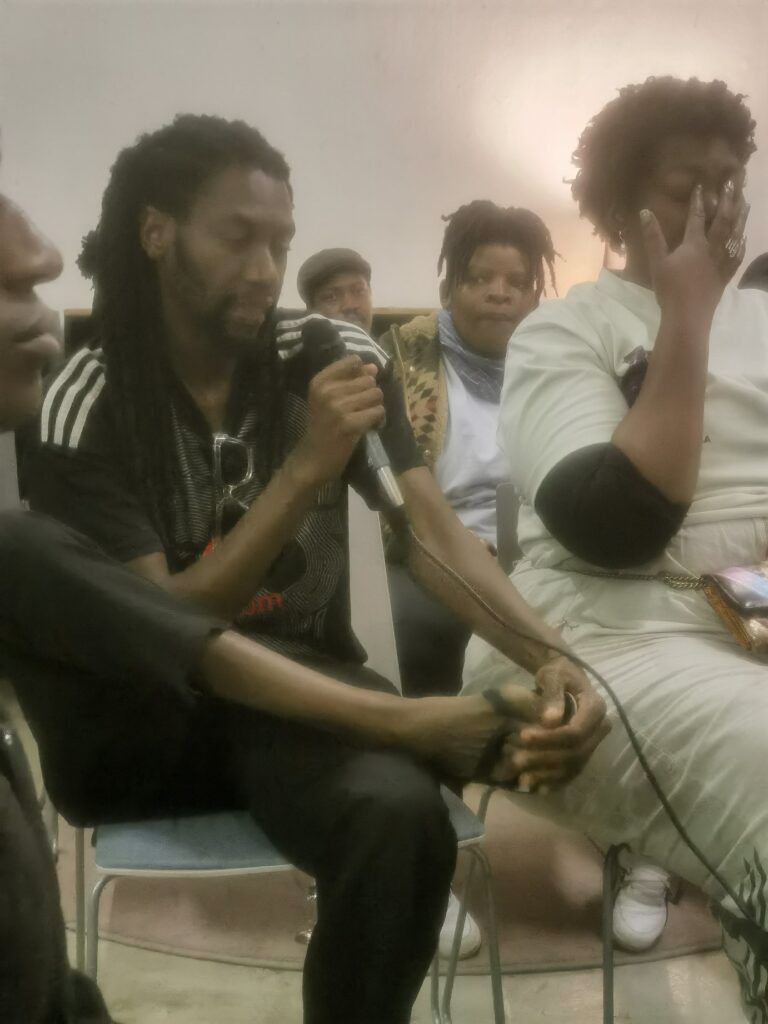
“When he was at AAA in Cape Town, studying, as family we had a scare when we could not locate him for days. It turned out that he was living with homeless children for a period of two weeks, to research the characters in Thirteen Cents,” said Kamo Duiker.
The reality though is, Sello did not publish a lot of books in his short life on earth. However, his literary legacy looms large on South Africa’s literary scene. His work is taught at universities and is widely discussed in literary symposiums and other spaces. He even has a stand-alone literary category on the country’s flagship literary award ceremony, the South African Literary Awards (SALA), named after him. And yet, he died young. Only 30, and at the time, his literary talents had just started to be appreciated, and professionally, everything seemed to be working properly for him, as he had a job as Commissioning Editor at the SABC. He also worked in advertising and as a screenwriter.
He killed himself, a victim of mental health, a subject he ironically explores in Quiet Dreams of Violence. He left the script in the safe hands of his unsuspecting mom, giving her clear instructions that she was to give the script to his publisher at Kwela Books. A few days later, tragedy struck. He took his own life at his Northcliff, Johannesburg home.
Reflecting today, because of his talent and the fact that he died young, critics are not out of line, when they often compare him to other sharp literary minds who were hugely talented and died young. Such as Dambudzo Marechera and Phaswane Mpe, for example. Both of them, just like Duiker, died young, when their literary careers were starting to be noticed and taken seriously by the literary establishment.
Phasane, when he died, also through a mysterious illness after attending an initiation school to become a healer in 2004, had published the critically acclaimed novel, Welcome to our Hillbrow. Marechera on the other hand, was lauded for his debut book, House of Hunger. Marechara died at the young age of 35 in 1987, while Phaswane was only 34 years old when he passed on.
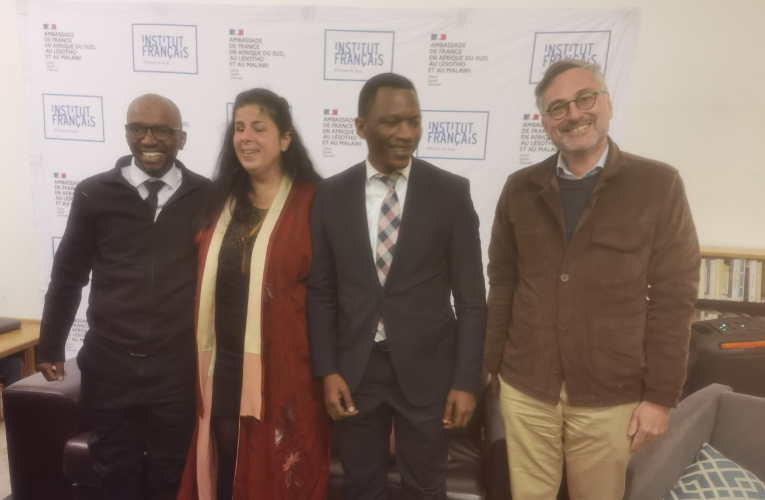
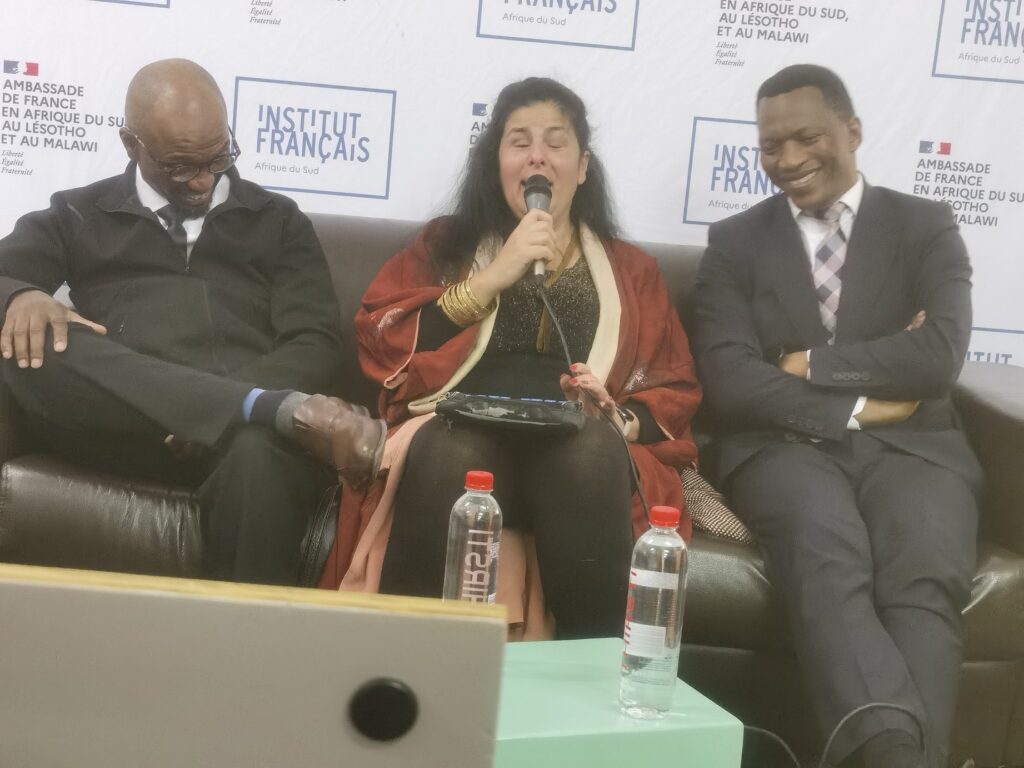
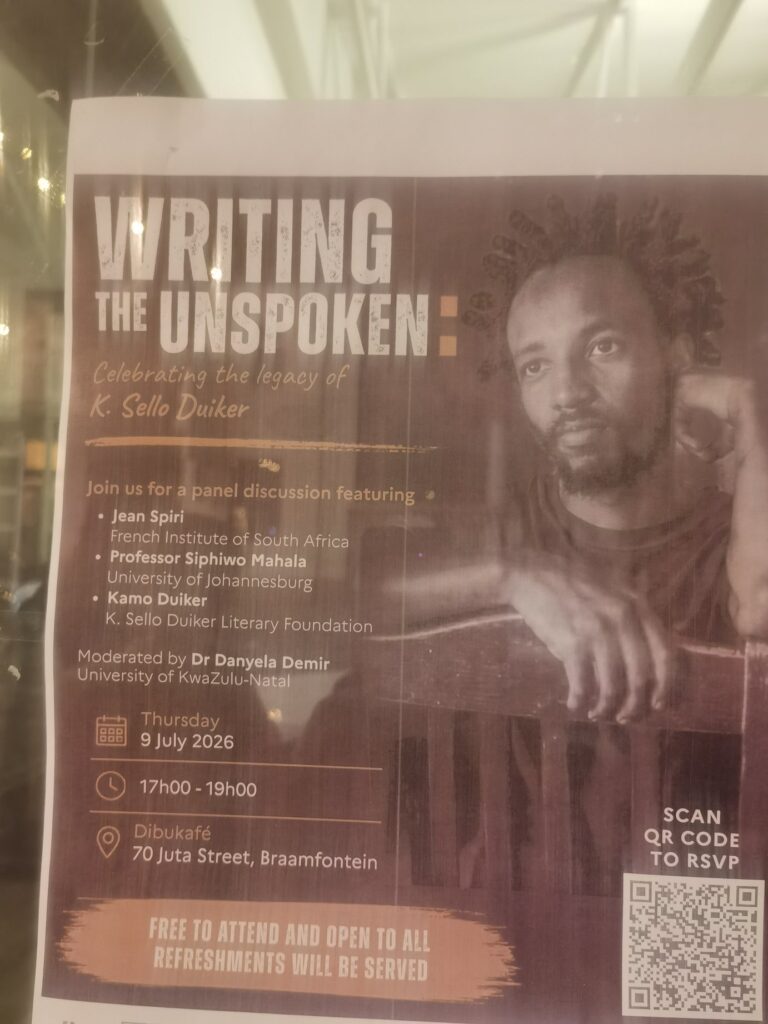
Titled Writing the Unspoken: Celebrating the legacy of K.Sello Duiker, this was an engaged discussion held on Thursday, July 9, 2026, at Dibukafe in Braamfontein, organised by the French Institute of South Africa (IFAS).
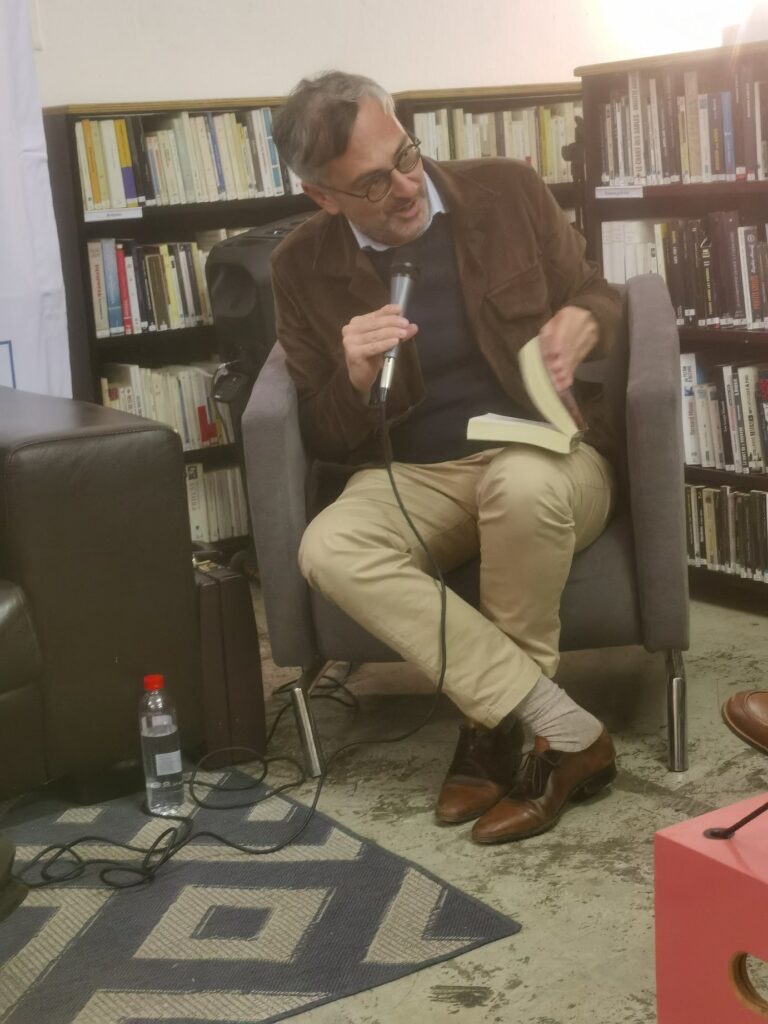
The event saw panellists, Dr Danyela Demir of the University of KwaZulu-Natal (Moderator) and panellists Prof. Siphiwo Mahala of University of Johannesburg, Kamo Duiker, a family member of the late Kabelo Sello Duiker, and Jean Spiri, the Director of IFAS S, not only grapple with the text and themes in the two books that he has published, but his life as well.
Kamo took the opportunity of the discussion to announce that a new foundation, Sello Duiker Foundation, which among literary figures has Mahala as board members, has been formed to honour the late K. Sello Duiker.
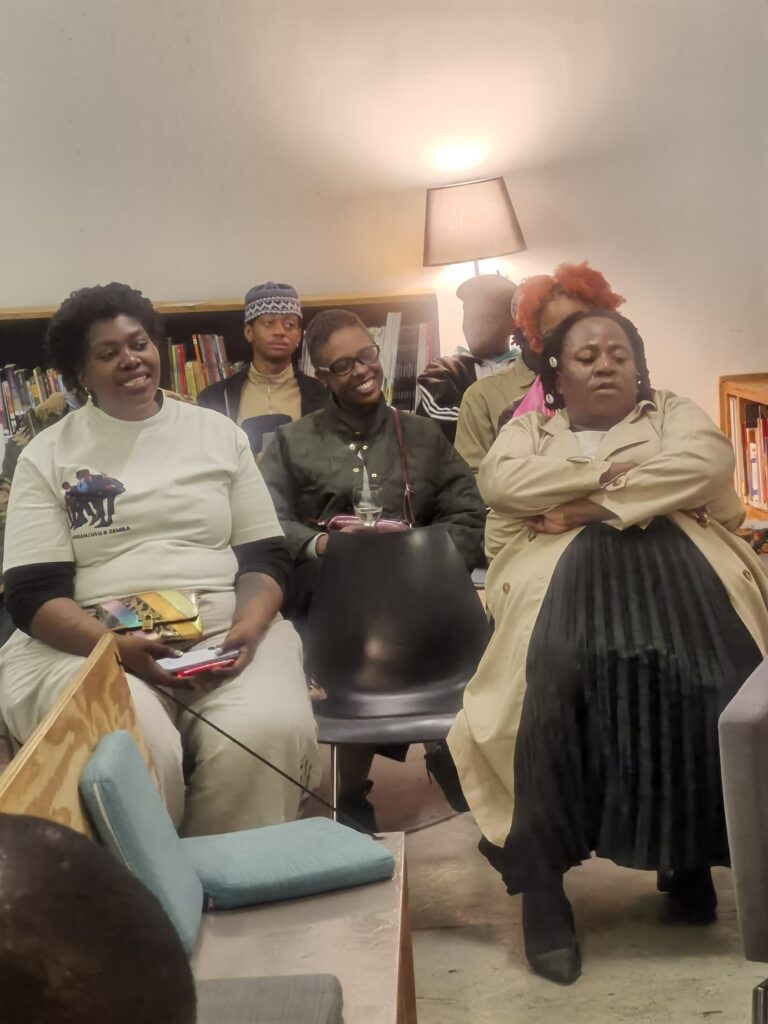
“Ä number of events have been planned by the foundation, including producing a documentary that will be put on Youtube, a website and an annual lecture. We are also talking to academic institutions to find a home for Sello’s work,” Kamo announced.
Mahala, who had known Sello Duiker personally, as way back as when he, Duiker, was a student at Rhodes University studying for a journalism degree, said what strike him about Duiker’s writing is to tackle socially sensitive themes in his books.
“Kabelo wrote about complex themes that at the time, made a lot of us uncomfortable to write about. Such as mental health and sexuality. We at the time did not know that we could write about this. Personally, I lost my mother due to mental health, a theme Sello writes about (In Quiet Violence of Dreams). She took away her life in 1986 when I was very young. For the longest of time, I did not want to speak about it as I was ashamed to do so. But now, I am ashamed that I was ashamed to speak about it then,” Mahala said.
Duiker’s books are currently becoming more accessible, as they are being translated into other languages, for example French.

“’There is however more news on its way about Sello. For example, we have been approached by a production company that I cannot name, which is working on creating a Netflix documentary. We are also seeking out help to compile a documentary about him, which will be on Youtube,”said Kamo.
Indeed, Mintiro Ya vulavula as K. Sello Duiker’s literary output is poised to be elevated to another level, including on screen, in academic halls and through public lectures through the Sello Duiker Foundation.