




Celebrating a city that is almost dying a slow death, as it becomes alive again
Running alongside Main Street is a walkable art mile that starts at Standard Bank Gallery on Simmonds Street – which was as usual, open on Sunday with its Homecoming exhibition – and meanders down to Asisebenze Gallery opposite Rand Club, with a pop-up CONTRA exhibition on the corner of Main and Simmonds.
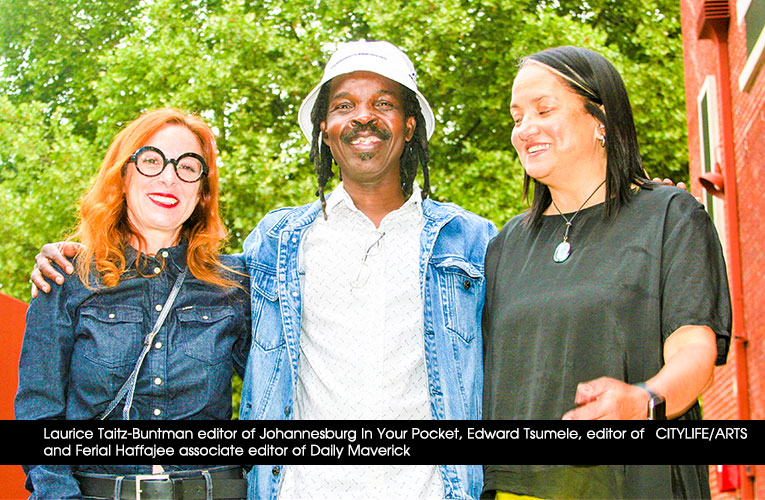
By Edward Tsumele, CITYLIFE/ARTS Editor
Johannesburg to the suburban folk and others beyond its borders, has become a swear word over the years. It is dangerous, dirty, overcrowded, and always its streets are teeming with unsavoury characters, ready to pounce on the unsuspecting or the non-street wise. The fact that a lawyer associated with a mining company was unalived recently in its streets in broad daylight, her life taken away by what at face value, has all the hallmarks of a hit, has certainly reinforced the perception of the city being a place to avoid at all costs. In fact, the narrative of Johannesburg no longer being described as going to the dogs, but rather being with the dogs, is a popular view held by many about the City of Gold.
However, the truth is, in as much as those views are not far-fetched completely, Johannesburg actually, has pockets of light. These are parts of Johannesburg that are in fact so clean, so safe and vibrant so as to rival, if not surpass, the rather boring suburban life with its impersonal malls. These clean pockets ofJohannesburg, few as they are,are starting emerge one after another, giving visitors the confidence to walk its streets with less fear these days.
Yes, there are parts of the city where if possible, one should try to avoid at all costs.
But it is equally true that some green shoots, are starting to emerge in the city, inviting even the most city-timid folk.
These spaces of light, are due to the efforts of civil society organisations, corporates working with the City of Johannesburg, collaborating to make the city a desirable destination once more, especially for those weary of the often dry and impersonal environments of suburban malls and their expensive restaurants, exclusive boutiques and swanky coffee shops. These folk are now looking for a rich tapestry of culture to imbibe, and Johannesburg CBD offers that in abundance.
In contrast to the suburbs, the energy in the city is powerful. People are real in their ordinariness. Diverse cultures are displayed everywhere by different nationalities. And indeed, one can meet well mannered, well cultured and respectful people in the city. These are people that have somehow made peace with the state of the city, undeterred by the pockets of madness that is also part of the city. You simply need to know which parts of the city you need to go to, particularly those areas that have been cleaned up by civil society organisations, such as Jozi My Jozi and others fighting back to restore the city to its former glory. What these organisations are doing is not simply to restore the destroyed infrastructure, but also the city’s dignity, as a place that can accommodate refined humanity once more. Just like what it was capable of doing in its days of glory.
Indeed, those areas that have been worked on so far, are clean, safe, inviting and brimming with culture, energy and rhythm like no other place outside Johannesburg CBD. Being in these places, is like observing poetry in motion. Busy, yes, but people are friendly, even to strangers, walk with purpose and confidence.
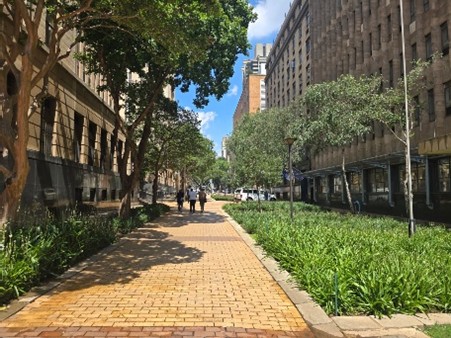
Of course, the city is still far from being what it used to be in years gone by, granted, but there is transformation of the city going on. Without blaring sirens. Without ceremony. The work driven by various organisations, such as Jozi My Jozi and its partnering Non-Profit Organisations to revive Johannesburg CBD, is starting to show.
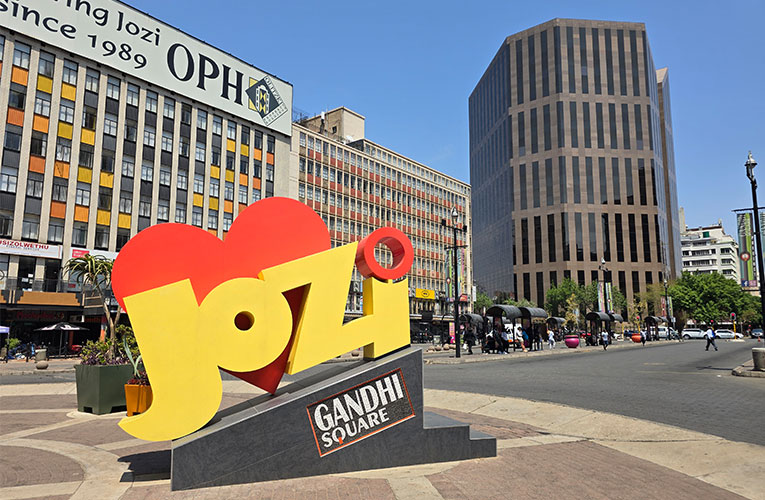
One such area, which in fact, should be declared a study in how to make a city liveable, is the Main Street node, stretching all the way from Gandhi Square in the East to West Gate, near the court, in the West.
Here, the streets are clean. The pavements are donned with healthy plants shooting out of the ground. Security guards standing from corner to corner, give visitors the confidence that their lives and possessions are safe. Therefore, people walk the streets with the same confidence you would find in someone walking at Mandela Square in Sandton City. Young professionals live in apartments that have been repurposed from offices into clean, almost super luxury apartments. The rent is affordable. Encouragingly, more and more professionals are moving into the area.
This node clearly offers a breath of fresh air, and brings back the confidence among especially visitors that used to prevail in the City of Gold before the rot set in. In fact, walking, especially on Main Street, you would forget that you are in the belly of a city whose decay has now become legendary, and a city which critics increasingly describe as a decaying carcass. Over the years, the rot has been so bad that the decay has engulfed a big chunk of the city, plunging the once beautiful City of Gold into a gigantic blanket of squalor and fear. Some cynics now describe Johannesburg as a museum that nobody dares visit.
However, since civil society in recent years, moved in to fix what authorities have either forgotten to fix, left to decay or a combination of both, the tide of a decaying city is slowly but surely being reversed. Yes, at this stage, it would be incorrect to suggest that a corner has been turned in rehabilitating Johannesburg. There is still more work to be done to fix the city. However it would be equally incorrect to ignore the good chapter that is being opened by imaginative activists, who imagine a different city, a future with possibilities.
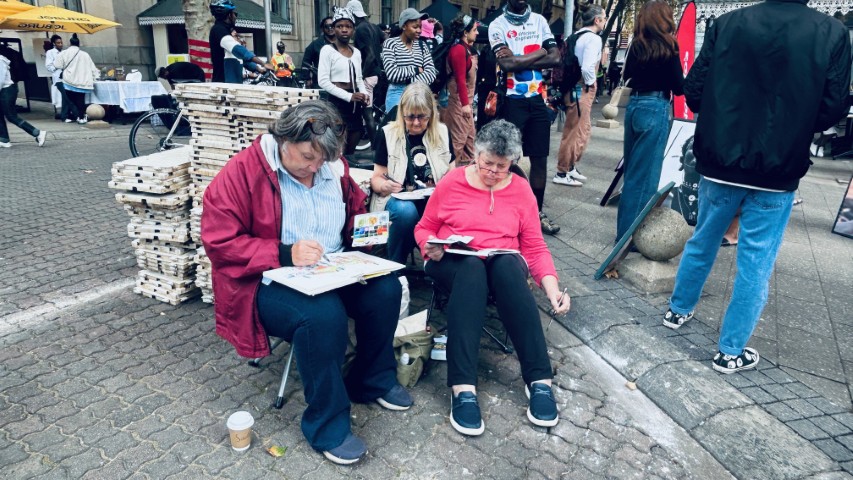
Clearly, situation of the city is changing for the better. For example, visitors, especially those who have long abandoned the city for wealthier northern suburbs, are starting to make a slow, but symbolically important comeback to the city that they have been avoiding. At least for now, the majority as visitors. Confidence to come back to a city they had long dismissed as being in a state beyond rehabilitation, is clearly being restored. One step at a time.
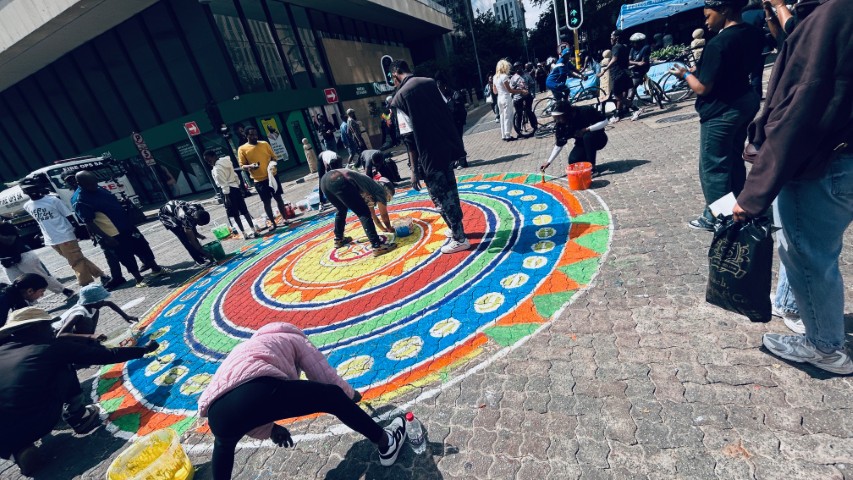
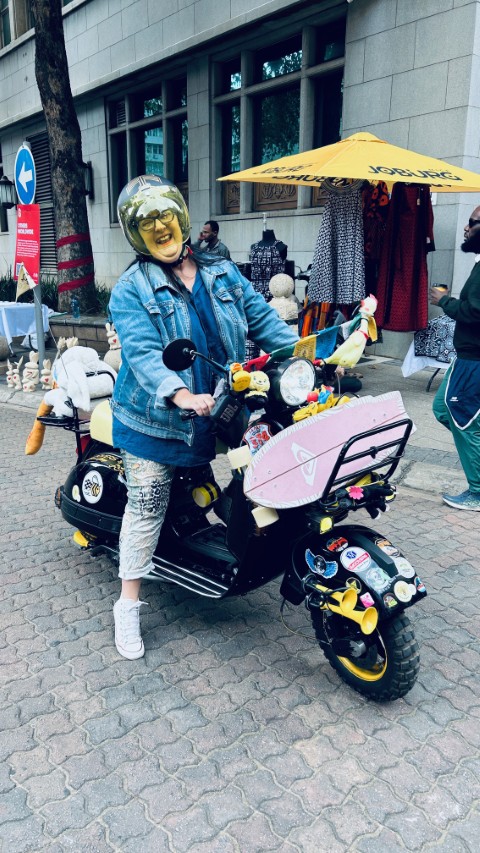
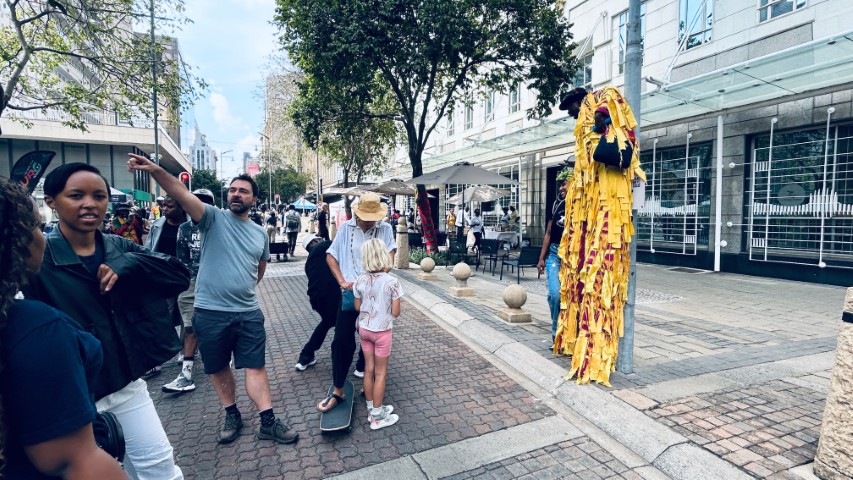
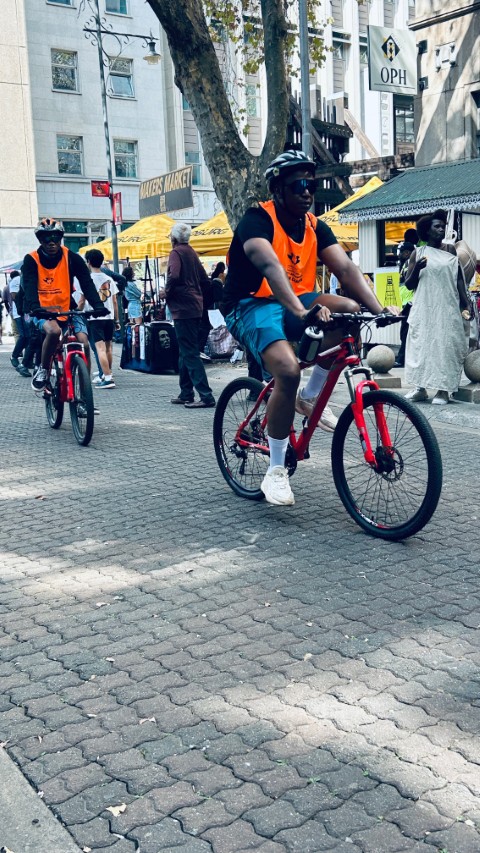
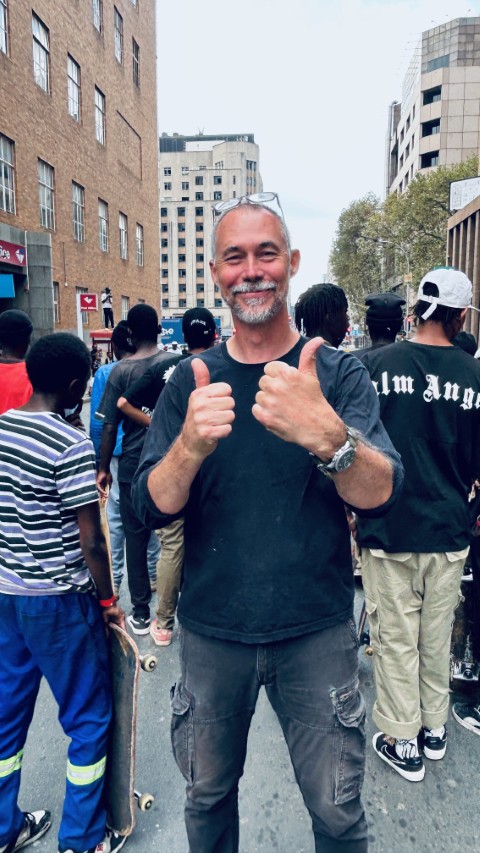
The momentum to fall in love with a city they fell out of love with, having written it off, is building up to the extent that on Sunday, April 12, 2026, a celebration of this milestone took place in the city’s streets. Visitors during the celebration, which took place on Main Street, swarmed the place. They moved in any other way they chose –walking, cycling, skate-boarding. But no cars were allowed on Main Streets, and the streets leading to the celebration venue.
However the concept of Main Street Sundays is not an original idea of Jozi My Jozi and its partners, but a social experiment that has been tested successfully else to revive cities that are on a declining trajectory, just as Johannesburg has been since the mid-1990s. It is inspired by Open Streets, an international movement for people-first cities that asks cities to rethink their most valuable public asset: the street network. In the spirit of Open Streets and human connection, Main Street in Marshalltown was on Sunday, April 12, 2026, closed to traffic, and open instead to families, children, students and residents who were invited to come out and connect in the heart of Jozi.
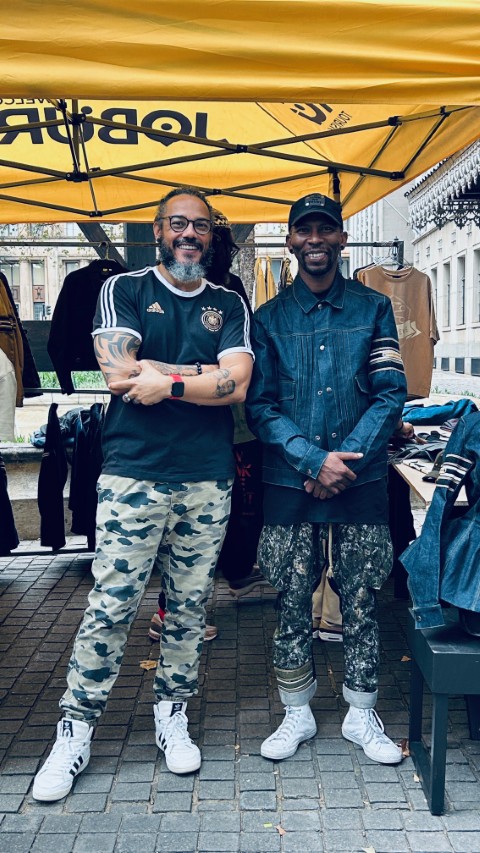
Therefore Main Street is a pilot route on Johannesburg’s Walkable Network – an approved City of Johannesburg policy and inner-city investment strategy that focuses activity, movement and investment onto priority routes so that interventions build on each other over time, rather than being spread too thinly across the city.
Dawn Robertson, Visitor and Creative Economy Catalyst at Jozi My Jozi, explains. “Main Street Sundays is part of a 50-year global movement that has transformed cities from Bogotá and Los Angeles to Addis Ababa, Cape Town and now Jozi. With Main Street closed to cars and taxis on Sunday, it’s going to be less hooting and hollering, and less rushing, too. Instead of peeking through the window as you drive by, Main Street Sundays gives you a chance to meet Jozi at a chilled, walking pace.”
“This is more than an event. This is a reclamation. Main Street Sundays isn’t a marketing stunt – it’s a rebellion against the lie that Joburg belongs to cars, not people. By bringing small businesses, artists, and real Joburgers onto the street together, we’re taking back what was always ours. We’re proving that the most powerful force in any city isn’t money or power, it’s people showing up, choosing each other, and saying: This is our space. This is our city,” she says.
From 44 Main down to Ghandi Square on the day, Main Street and the interconnecting side streets, were transformed into nine activation zones focusing on: wellness, mind and body, books and reading; Jozi My Jozi info zone; active mobility – bikes, trikes, prams, skateboards; live music; kids’ interactive play zone; art and design; games such as table tennis; making music; and the food court at Ghandi Square.
Art, regading as the heart-beat of the city, with several art studios located in different parts of the old city, was not left out in this celebration. Running alongside Main Street is a walkable art mile that starts at Standard Bank Gallery on Simmonds Street that was open on the day with its Homecoming exhibition – and meanders down to Asisebenze Gallery opposite Rand Club, with a pop-up CONTRA exhibition on the corner of Main and Simmonds.
Main Street Sundays is a partnership between hosts Jozi My Jozi and Young Urbanists NPC, Johannesburg Inner City Partnership (JICP), Johannesburg In Your Pocket, and the City of Johannesburg (CoJ).
“If we want Johannesburg to work, we must start with its streets. Because once you change the streets, you change the city. And once you change the city, you change the country.” This is the view of Roland Postma, Managing Director of Young Urbanists NPC, which manages the City of Cape Town’s latest Open Streets Experiments along Bree Street in the CBD and Lerotholi Ave in Langa. He believes both Open Street Experiments and collaborations with organisations such as Jozi My Jozi and different municipalities can bring positive change by rethinking how we use roads to solve our many inner-city problems.
“Open Streets on Main Street represents the kind of city we are working to build in Johannesburg – one that prioritises people, safe public space, and active mobility. By opening our streets to walking, cycling, and community life, we are demonstrating how transport infrastructure can support healthier, more inclusive, and vibrant neighbourhoods,” says Lutando Maboza, Executive Director: Transport, City of Johannesburg.
This initiative according to the organisers, demonstrates the Walkable Network in action – a network that connects public transport hubs, heritage sites, and economic nodes through safe, green and walkable corridors. The Open Streets initiative sits at the very heart of this programme, and Main Street Sundays is a perfect example.
For the Johannesburg Inner City Partnership (JICP), CEO David van Niekerk sees Main Street Sundays as a clear demonstration of how the Walkable Network works in practice: “Main Street Sundays shows how focused activation on a single route can begin to shift how the city works – increasing footfall, improving safety through presence, and supporting local economic activity. When these interventions are aligned on the Walkable Network, their impact compounds over time.”
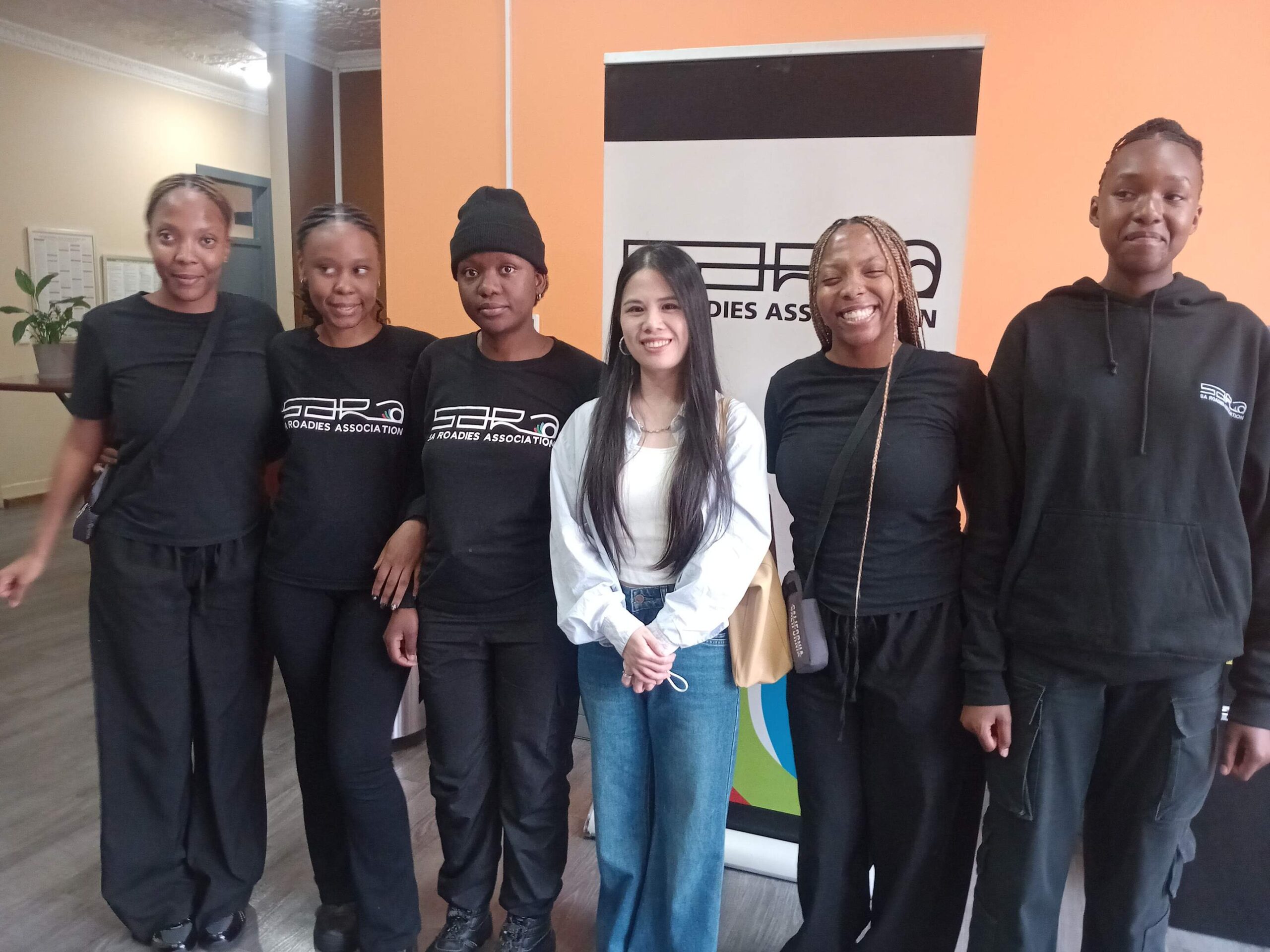
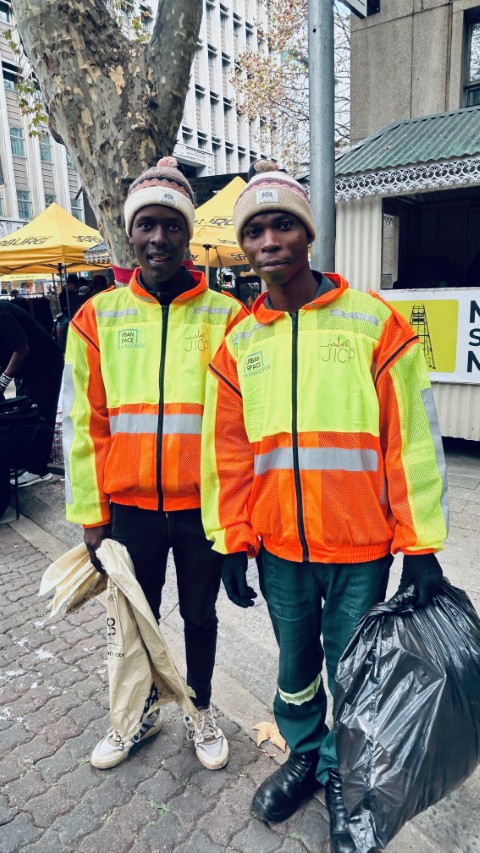
The JICP’s support on the day also extended to sponsoring members of its Social Employment Fund (SEF), who will act as marshals and assist with cleaning.
“Johannesburg is at a crossroads – while it is struggling in some areas, it is also alive, creative, and filled with people who haven’t given up. Jozi My Jozi and civil society groups like Young Urbanists are not another marketing campaign – they are platforms for doing and for testing new ways. This initiative promises to bring together civil society, traders, neighbourhood groups, skaters, artists, families, city planners, and the municipality itself, even in its current state, to demonstrate positively that a better urban South Africa is possible right now, without having to wait for some perfect master plan to be delivered,” the organisers state.
“Roads are the lowest-hanging fruit for improving the quality of our cities,” says Postma, “yet the public conversation is still dominated by the idea that progress simply means ‘no potholes’ and working traffic lights. We absolutely deserve those basics, that is not up for debate. But if our vision for better cities stops at basic maintenance, then we have to ask: what kind of a future are we trying to build?”
Having taken place in recent months, it was on the Walkable Network in Jozi where the country’s first ever street experiment was conducted by Johannesburg Development Agency (JDA) and Local Studio in a tactical urbanism project called Hello Joubert. It aimed to improve the safety and access for pedestrians and traders by temporarily transforming sections of the street for public use. Similar experiments have taken place in Melville and Brixton.
Most recently, the upgrade of Lilian Ngoyi Street, formerly Joburg’s Bree Street, according to the organisers, shows what the municipality can do to rethink a street for everyone, not just cars, by following its Complete Streets Framework. The conversion from a five-lane thoroughfare in the heart of the city to a two- to three-lane street with improved space for pedestrians, traders, and public transport users demonstrates how a street can work for everyone.
“We know that when Joburgers move, the city moves. The CBD doesn’t need saving, it needs showing up – not with grand plans or big budgets, but rather with businesses, artists, residents, and dreamers alike choosing to invest where it matters to open doors, take risks, and believe that Jozi’s heart still beats strong,” says Robertson.
“We’re not waiting for someone else to fix this city. We’re building it together. When a café opens its space to the street, when a business hires locally, when creatives collaborate instead of competing, that’s how change happens – small acts with many hands and real commitment.”
Therefore initiatives of this nature will be sustainable or not in transforming the city into a top attraction for local visitors and international tourists is subject to the verdict of time, what became clear on Sunday, is that when intelligent strategists and activists come together, the future of this declining city is open for possibilities.