





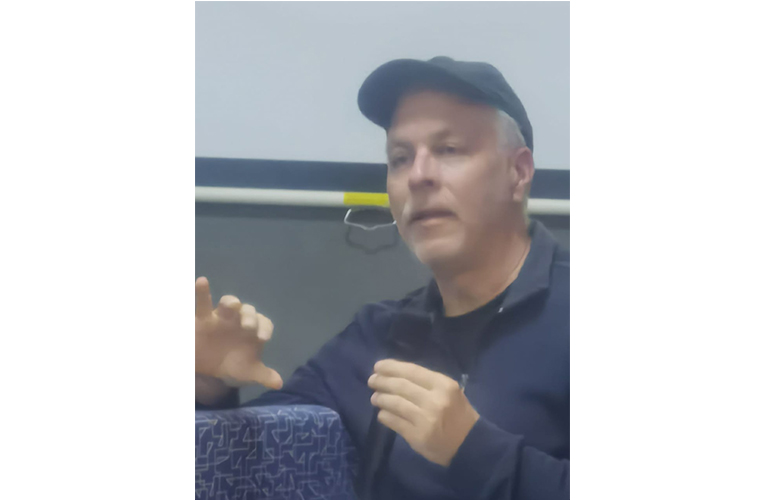
Distinguished academic Prof TJ Demos shines spotlight on effect of slavery and environmental violence on vulnerable communities by big corporates with collaboration of political elites
By Jojokhala C. Mei

University of Johannesburg’s Visual Identities and Design Research Centre (VIAD) says it is ever so excited and honoured to host Prof TJ Demos of the University of California Santa Cruz as a Distinguished Visiting Professor whilst writing a book to interrogate the justice contemporary art can and should play to challenge types and levels of environmental violence.
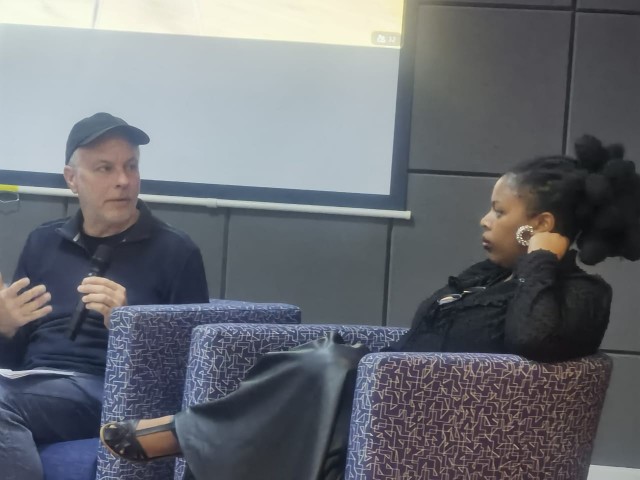
In fact, VIAD’s Prof Leona Farber calls this interrogation a ‘reimagining’. At an illuminating lecture the distinguished professor presented at UJ on Wednesday, where his academic credentials and exploits were introduced by the Executive Dean of the Faculty of Art,Design & Architecture at UJ Professor Federico Freschi, those who gathered were given a deep insight into the thinking of the academic around the issue of slavery and environmental destruction by big corporates often undertaken with no regards for vulnerable communities, ahead of the publishing of a book on the same subject.
Prof Demos, popularly referred to by many by the moniker ‘TJ’, starts right in his Sana Cruz backyard by citing US artist Jackie Sumell’s lush Solitary Garden of CARE reclaimed on a university campus.





How the theme of ‘care’ keeps coming up nowadays, like last weekend’s Oxfam-sponsored discussion in Brixton Johannesburg on the need and strategies to restore an economy of care in South Africa to override present day gung-ho economics.
TJ Demos contrasts Sumell’s Solitary Garden with weaponised tree-planting as far back as 1660, only 8 years after Jan van Riebeeck colonized the Cape, when an ‘alien’ tree was planted at the foot of Table Mountain where it still grows in what is now the world-famous Kirstenbosch Gardens.
Another exemplary project is Vivien Sansour’s Heirloom Seed Library and Travelling Kitchen, in which the ‘Care’ of public food preparation creates the fast disappearing ‘Care’ social environment using the plants grown from the seed bank.
Then comes a project by the UK-based Forensic Architecture group which tackles head-on the ghastly and larger environmental violence of petroleum pollution to the once enslaved African-American communities along the Mississippi River of the Deep South, and dubbed ‘Death Alley’.
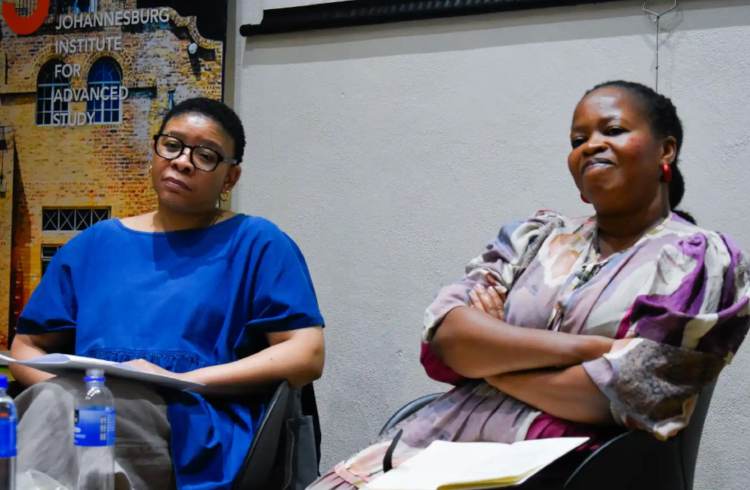
Finally, Nondumiso Lwazi Msimang responds to the lecture because she is what they call VIAD’s ‘performance artist and provocateur working at the intersections of the paradoxical’. Indeed, she echoes Prof TJ Demo’s paradoxes, ‘genocides to ecocides’, by highlighting contesting interpretations and practices of environmental justice in the broadest sense of the idea.
Oh, our understanding is left so much the richer.
As Prof TJ Demos moves around during his stay he will find it hard not to draw more South African parallels than at Kirstenbosch Gardens, including (1) a Mpumalanga / Limpopo /Gauteng /North West Seed Bank for peasants, (2) an American’s gesture to scoop earth in his hand and let it run through his fingers imitates the isolated leader of the Pan Africanist congress imprisoned in the 1960s on Robben Island, Mmangaliso Sobukwe, who also silently communicated this way to other distant prisoners that the Western Cape, and all South Africa, is our soil; (3)he will breath in the contemptuously claustrophobic social landscape design of suburbs in the far western side of Soweto, rightly or wrongly deemed ‘Deep’ Soweto.