


New kid on the block: Die Papier is rising, set for prominent role in delivering news in Afrikaans
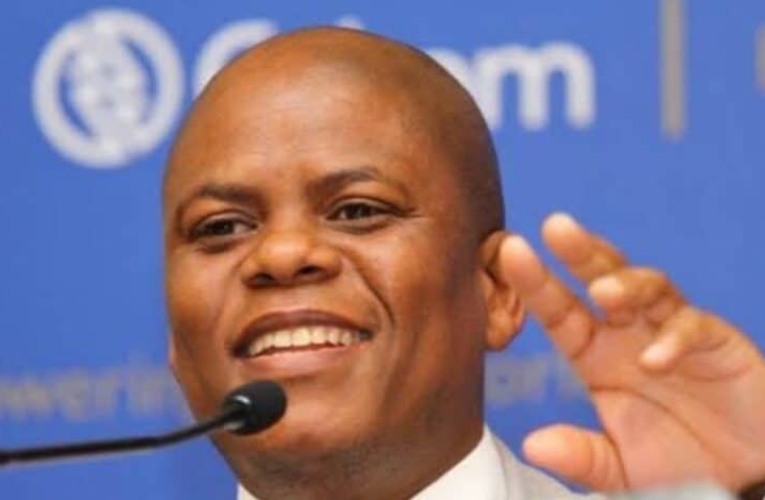
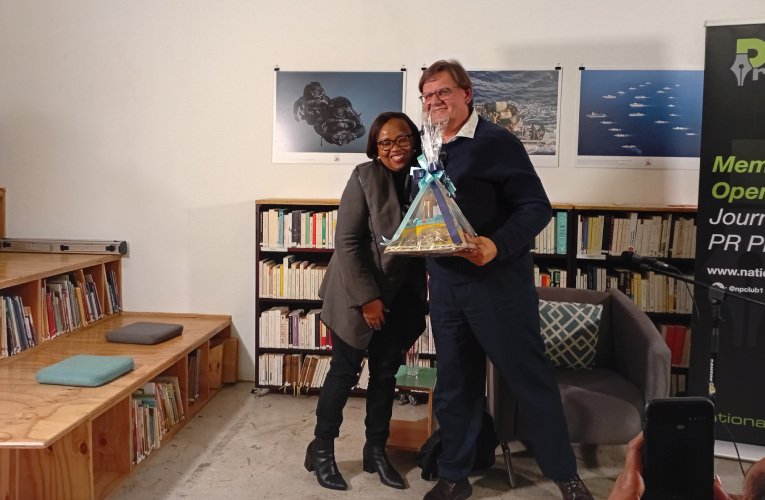
None other than Barnard Beukman, Editor of Die Papier, Novus’ new Afrikaans weekly newspaper, was featured in this event, aptly titled The State of Media: A Networking Session with Barnard Beukman. The event was organised by the National Press Club, in association with IFAS.
By Edward Tsumele, CITYLIFE/ARTS Editor
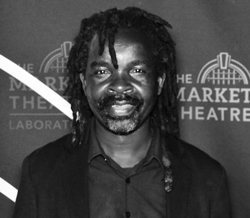
Pictures of Barnard Beukman: By Tonderai Chiyindiko
Throughout history, newspapers and magazines have come, some making a huge impact on the media landscape and society, and have unfortunately gone, closing down for one reason or the other. This trend has happened throughout the world, and South Africa is no exception.
For example, there was once a magazine called Scope that was embraced especially by both teenagers coming of age and adults alike because of the models it featured. Many a male teenager then, will confess that they discretely kept pictures of these half naked models cut of from Scope, somewhere in their bedroom, away from the prying eyes of adults, who would not be impressed that their teenage boy has ambitions of getting involved in activities society has reserved for adults only. That is as if the inevitable will not happen. I must admit, I personally had my own pictures of these models secretly stashed somewhere known only to me in my bedroom. But of course that iconic publication is long gone, joining a list of others that one could describe as highly political and intense in investigation, have been published, made an impact and unfortunately folded up.
Think of New Nation, the publication, which alongside the Weekly Mail (which has since morphed into (Mail &Guardian) and Vrye Weekblad, an Afrikaans language newspaper founded by veteran journalist Max Du Preez in 1988, which like the other two above, was known for its anti-Apartheid stance. It became an alternative voice in the Afrikaans media during the Apartheid period when townships were on the boil and the State of Emergency was in place.
This publication, which occupied a proud space within the ant-Apartheid media unfortunately closed own, ironically in 1994, when freedom dawned and voting was extended to everyone eligible to vote, ushering a new post-Apartheid democratic state.

However, when the publication was re-launched as an online publication in 2019, hopes were raised that it was once again going to be a relevant voice in a changed political landscape, doing what it was once known for –carrying out robust investigations and unmask the rot among the corrupt. This time, in post-Apartheid South Africa.
However, those hopes were dashed as it once again closed down in 2025.
Of course New Nation is now history, as it also closed down in post-Apartheid South Africa, but Mail & Guradian is still soldiering on, in a tough market for the media in a context of new technologies having been invented, and dramatically changing how readers access information, and advertisers having migrated in huge numbers to technology enabled mass platforms that eat the huge chunk of the advertising cake that once belonged to legacy media.
And of course, we know what has happened to once powerful and iconic publications in recent years, such as the closure of City Press and Beeld and several iconic magazines, among others in this tough media space. The current media landscape is such that old models no longer suit the needs of readers who now prefer to access news and information differently. For example through the convenience of cellphones.
However, not all is lost, as new media platforms have sprung up, doing exactly the same thing as traditional legacy media did, which is publishing news and information as online publications, podcasts and Youtube platforms, some of them integrating these platforms. Die Papier, seems to be going in that direction, as it also owns a podcast, as part of the publication’s growth strategy and as a response to the behaviour of a modern news consumer.
It is against this background that when the new publication was launched in March this year, there was a lot of public interest, and even curiosity among media observers, journalists and publishers in the new publication.
And there are various reasons why the launch of Die Papier, an Afrikaans national newspaper has attracted such interest and scrutiny, one of which, is the fact that it happened when a number of publications, even those publishing in the very same language, for example, Beeld, have closed shop, with Beeld currently existing only as an online publication after stopping printing. City Press has altogether ceased to exist.
It is for this very same reason, that on Wednesday, July 29, I joined a number of media professionals, who filed into Dibukafe, a centre that operates as a library and event space in Braamfontein, Johannesburg, run by the French Institute of South Africa (IFAS).
None other than Barnard Beukman, Editor of Die Papier, Novus’ new Afrikaans weekly newspaper was featured in this event, aptly titled The State of Media: A Networking Session with Barnard Beukman. The event was organised by the National Press Club, in association with IFAS.
Beukman generally discussed Novus Holdings, home to 20 community newspapers and one national publication (Die Papier) and provided an overview of the company’s outlook on the current media landscape.
Many who pitched, were obviously interested particularly in knowing how the new kid on the block, ironically edited by a former Editor of Beeld, was doing on the market.
Beukman painted a picture of a newspaper initiative that is on the rise, having been warmly embraced by both the readers and advertisers, some of whom signed a year’s contract before even the newspaper hit the streets and newsstands.

“Although I cannot reveal the figures yet, as we are not allowed to do so by the Audit Bureau of Circulation, as they are busy auditing us for the April and May period, I must state though that we are doing very well. We have surpassed our expectations. Most of our readers, who constitute 20% percent of our national readers, are found in Pretoria East. These are wealthy readers,” he confidently stated.
Beukman said that even though the trend is to go online, which Die Papier has so far done to a limited extent, publishing snippets of daily breaking news, in addition to telling its readers what big stories are carried by the paper on next Friday, there are still readers who prefer to read an actual paper.
“These are people that have been left by their legacy newspapers (that have either closed down or entirely migrated online). These are people who have time or create time to read a newspaper for better insight and context to stories that have been reported on already,” he said.
The veteran editor also shared their recent scopes, such as an exclusive interview with newly appointed South African Ambassador to the US Roelof Meyer on his recent visit to the country, as well as an exclusive interview with former DA leader and former Minister of Agriculture Steenhuisen in the Government of National Unity. Steenhuisen was recently in the news, when he was demoted to Deputy Minister of Trade, Industry and Competition, after his party, the DA asked President Cyril Ramaphosa to reassign their former leader to that position, an event generally regarded as a demotion.
“We managed to get an exclusive interview with Roelof Meyer at his home on his short visit back home from the US. Our political editor shared that exclusive interview with Daily Maverick. We also recently had an exclusive interview with John Steenhuisen,” revealed Beekman. This suggests that the new kid on the block is fast consolidating its foothold on big national stories, ahead of well-established publications, suggesting that the influential are taking Die Papier, seriously.

CITYLIFE/ARTS asked the veteran editor to define the position of Die Papier in terms of the centre of politics –whether left or right, or middle.
Beukman however, painted a positioning that is neither on any of the extreme poles, suggesting that Die Papier, is at the centre, but with both left and right sensibilities.
“We are in an era where the two extremes are both shouting at each other without hearing each other. They do this for algorithms. That in fact, is not helpful, as there is a need for the centre.
“However, we are quite aware of the frustration of our readers when it comes to issues like service delivery and corruption currently in the country,” he added.
This suggests that news in those areas are a prominent feature of Die Papier,’s news agenda and news mix, in a way, confirming the newspaper’s strong political positioning role in South African politics.
There you have it. The new kid on the block is here, and rising, set to play a prominent role in delivering news in Afrikaans in the face of the recent demise of other voice in the media generally, including iconic Afrikaans newspapers, such as Beeld and City Press.