


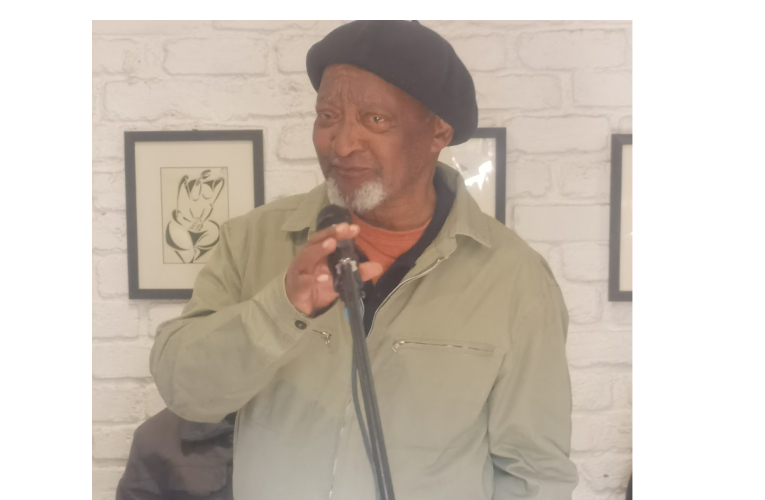
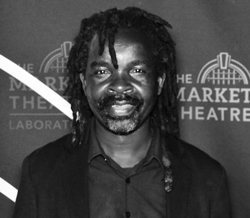
Public intellectual, poet and painter, Lefifi Tladi proposes public cleansing for South Africa to be on the right course
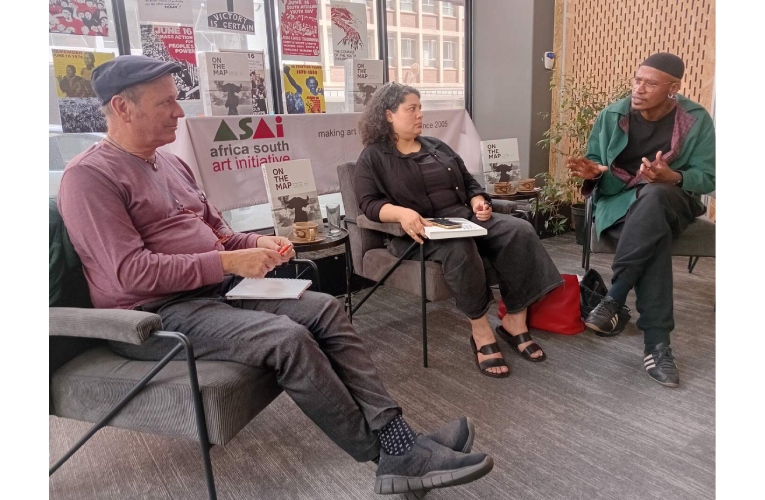
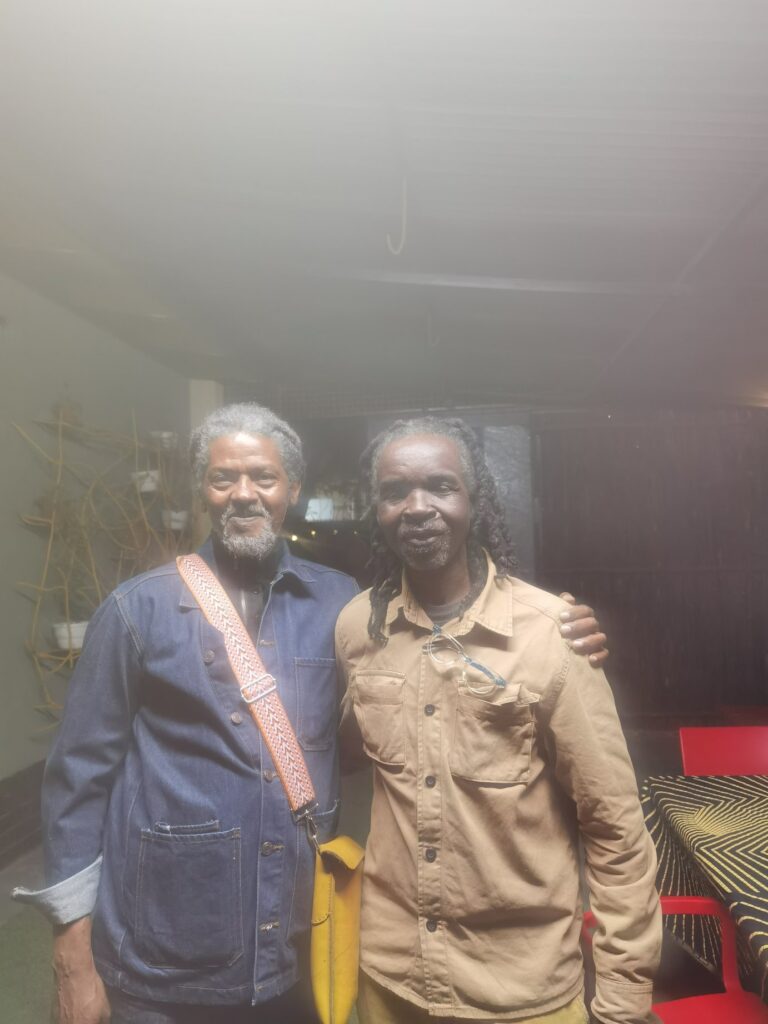
Tladi was part of a panel that discussed the state of the country at a June 16 event at Afrikan Freedom Station in Sophiatown on Tuesday.
By Edward Tsumele, CITYLIFE/ARTS Editor
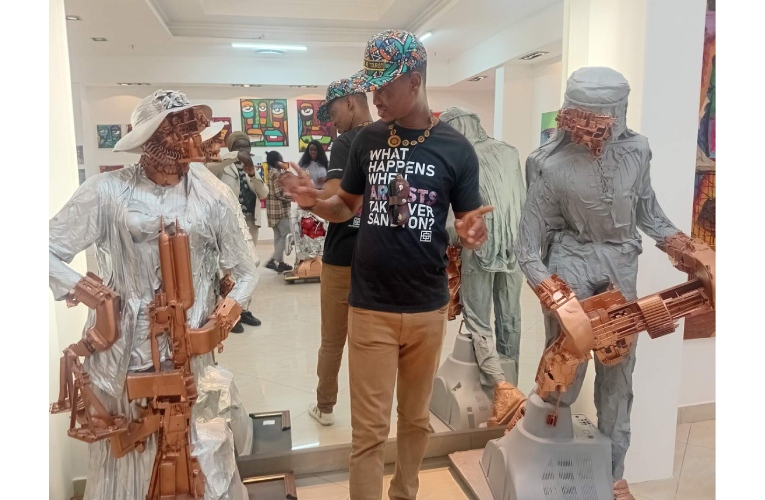
It was actually a beautiful afternoon: Indigenous music, art created by young artists and a thought provoking discussion, raising the issue of African identity in a world whose shape and form is predominantly shaped elsewhere, instead of, by indigenous people. These issues took centre stage.
The event attracted scholars, intellectuals and artists, who came in big numbers at Afrikan Freedom Station in Sophiatown on Tuesday, June 16, 2026. It was a Youth Day themed event. . The venue, which is a pop up cultural vanue hosting events such as poetry, jam sessions and discussions, co-owned by actor Coco Merkel, and cultural impresario Steve Koena. It is a mere 300 metres from the Trevor Huddleston Memorial Centre, and the iconic house that used to be a home of AB Xuma.
Xuma was a well-known medical doctor, and political leader, a one-time leader of the ANC during the Sophiatown era, who lived in Sopiatown of the 1950s and 1960s. That day, Tuesday, June 16, 2026, was framed as a June 16 event, commemorating the Student Uprising of 1976, that started in Soweto, after which its echoes were heard and felt elsewhere, where black students in South Africa, felt that they too, were affected by the action of the Apartheid Government.
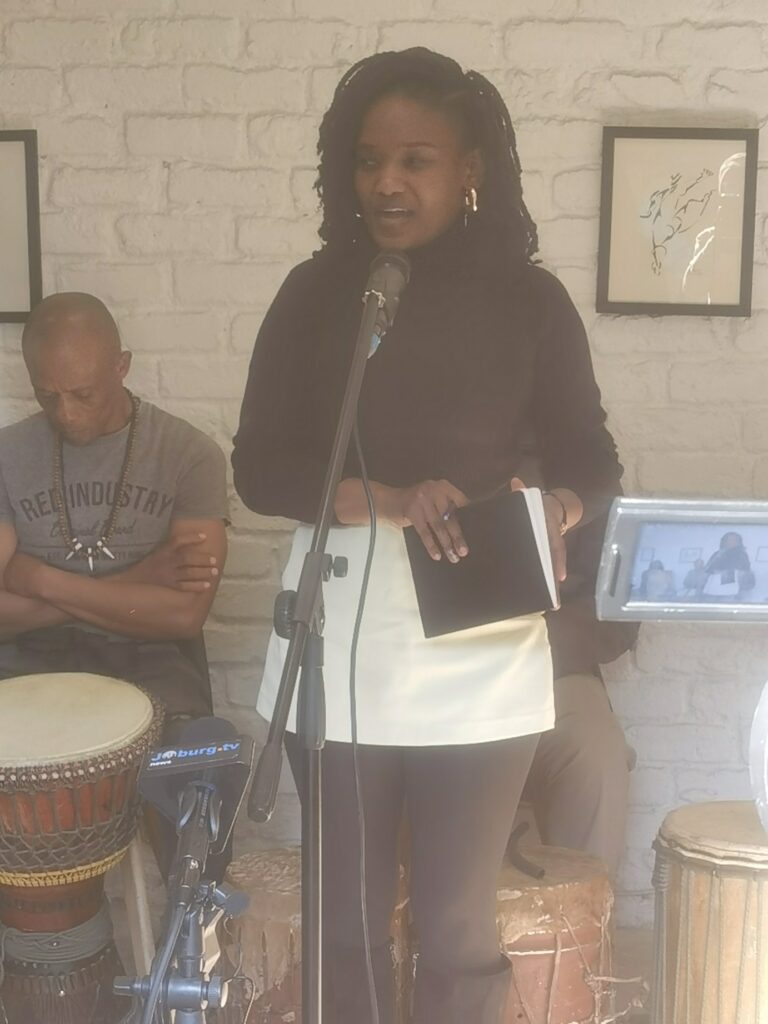
An attempt to introduce Afrikaans as a language of instruction at black schools. And the event, titled In Conversation with Lefifi Tladi: Malopo Heritage, Resistance and a legacy of Symbols, was facilitated by poet and academic Kgafela oa Magogodi, with artist Turiya Magadlela and Wits anthropology lecturer, Dr Kholeka Shange, as respondents. The discussion lived to its expectations. The panellists, all of whom displayed strong views on the subject under discussion, while the audience responded positively. The discussed touched on a number of uses, everything about where we are now, as a country, 32 years after democracy, with regards to identity, culture and the freedom.
What dominated the discussion at this event, is the question of identity, cultural and epistemological domination by colonial dynamics in a post-colonial and post-Apartheid South Africa.
The issue of the use of African languages in particular, was under a particular microscope. This is as often, black people when encountering other people, particularly those speaking a Western language, such as English, tend to be accommodative, instead speaking their own languages.
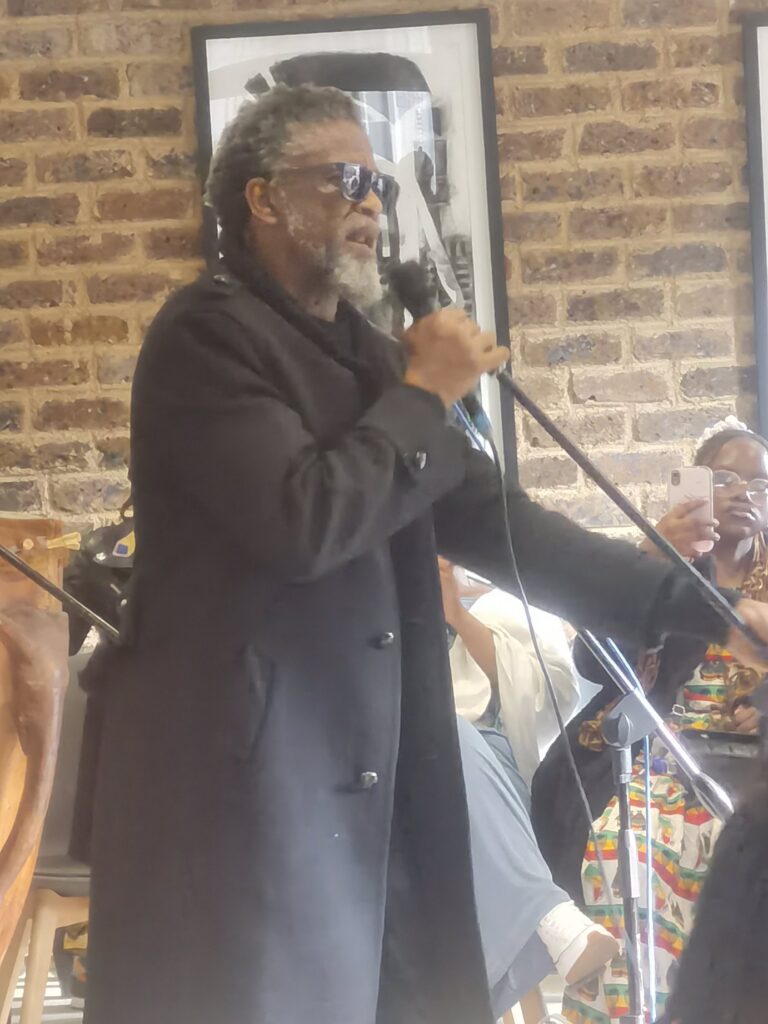
Tladi, a respected public intellectual, painter and poet, who travels between South Africa and Sweden, framed the issues South Africa is facing today, when it comes to an unfulfilled black life in democratic South Africa, as caused by ‘unfinished’ business since 1994.
“There are a number of issues that were not done properly or accomplished. The National Anthem for example, is a cut-and-past job of the African anthem and the Die Stem. So, we actually do not have a national anthem (after freedom). The country was not renamed. There was no cleansing of those who came from exile and those from Robben Island.
After all these processes, it is then that as a country, we needed to define ourselves,” he said.
Tladi, who went to exile during apartheid, belonged to the class of those aligned to the Black Consciousness philosophy.
He is also sceptical of the emerging thought of decoloniality, a new buzz word in academia that is aimed at centering the curriculum in line with realities of post-colonial Africa, with sensibility to African philosophy.
“Even the issue of decoloniality, is framed from the Western point of view. There can never be decoloniality to be achieved, when the tools used are those from the West, as they are still in charge of the grammar,”Tladi reasoned.
This, he argued, means that the outcome of such a decoloniality project, will produce an outcome shaped by the tools used to analyse it.
Magadlela, whose late father was a well-known South Africa painter, the late Fikile Magadlela, said that the predominance of European epistemology in everyday life, is so strong to find a word in indigenous languages that describes what for example, art is.
However, Shange, whose doctoral thesis was on photography as practised in black communities, said that in fact, there was a word in isiZulu, and other Nguni languages to describe what art is.
The question of how artists operate within a tight space of creating meaningful art, out of which they must earn a living, and at the same time producing art for the sake of art, became a hot subject of the discussion as well.
“Ï have recently won an award, and I asked the organisers the question, what the award came up with beyond a symbolism gesture. This is because, for example, I cannot go to Shoprite Checkers and buy something using the award.”
Magadela in turn agreed with him.
“In my art practice, I use second hand clothes to create art. Often, these are clothes donated by those in the West to us. I therefore, use their rubbish to create art that I sell back to them. Today, it is hard to find my work in South Africa, and yet, it is all over Europe. I have gone commercial for the same reason that Ntate Tladi has just questioned about the value of awards. At some stage, there must be an exchange of material value that one can use for example, to buy something from Shoprite.”
Magadlela encouraged black South Africans to collect art, especially created by young artists.
“Just like Ntate Tladi, whose archive is now famous, it is important for one to build an archive of art, especially of the young artists, because on those walls today, there is art that particular art work created by a young artist, begging to be collected,” she said.
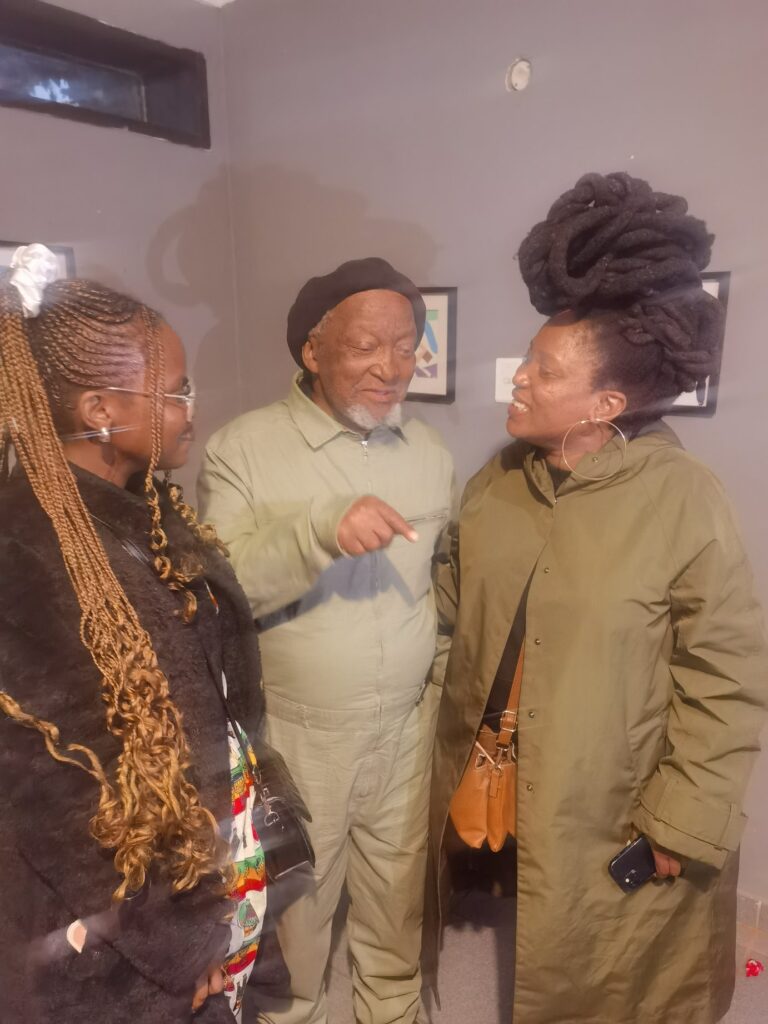
After this discussion, it was time for the guests to network and exchange notes about loi8fe and what had just been discussed.
Great event ✊🏿