




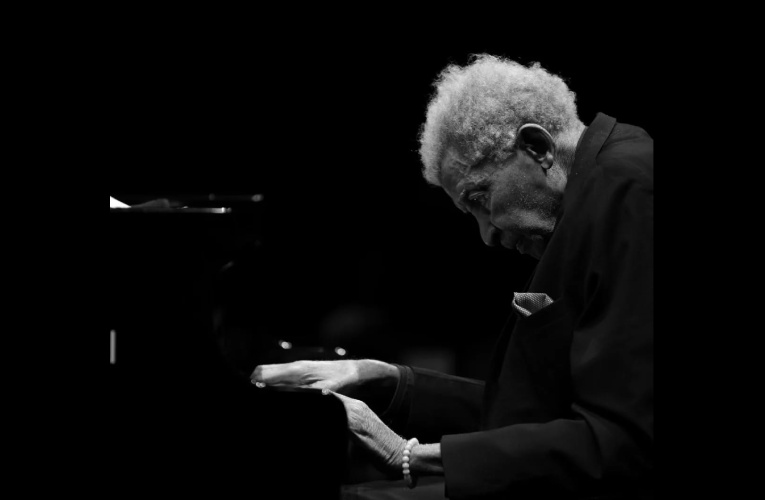
CITYLIFE/ARTS pays tribute to Abdullah Ibrahim, who has passed on
The demise of master jazz pianist Abdullah Ibrahim marks the end of a jazz era in South Africa.
By Edward Tsumele, CITYLIFE/ARTS Editor
It is a difficult moment. Quite a challenge to celebrate what the brave young people of June 1976 did-confronting Apartheid head-on, and as a result, helped to shape the course of history in South Africa. Their action immensely contributed to efforts of steering the country into democracy eventually. However while South Africans are commemorating June 16, at the same time, they are mourning the demise of a monumental jazz artist, Abdullah Ibrahim. Many will readily agree that right now, they are inflicted by mixed emotions. On one hand, they are taking part in commemorative events taking place throughout the country, while on the other, they are mourning the death of a jazz legend. Ibrahim (1934-2026) passed on yesterday, June 15, 2026. He was of course old, however it is human nature that those we love, we would love of them to live for ever, especially those with great talent, such as Ibrahim was gifted with.
Born in District Six in Cape Town, Ibrahim trailed an inimitable jazz route, first, as Dollar Brand, and later, as Abdullah Ibrahim, after converting into the Moslem faith.
The jazzman, one of the finest pianists in the world in the jazz genre, has released great music pieces in his life time. Compositions that touch in a powerful way, both the mind and the heart. However, a few will dispute a suggestion that Mannenberg is Where its Happening, stands out among his great pieces of compositions. It is one that will remain eked in many jazz fans’ psyche, especially whenever they remember the contribution to the jazz cannon of South Africa by Ibrahim.
With almost a Saint-like demeanour, Ibrahim was completely committed to jazz, composing and performing around the world, even at his advanced age. His last performance in South Africa was at the Cape Town International Jazz Festival this year. Those who were lucky enough to go, reported that although he was frail, his commitment to an art form he dedicated his whole life to, was clear during his set.
Ibrahim, whether in performance on stage or during interviews with journalists off stage, commanded respect without saying so. His presence was everywhere. I personally have witnessed on a number of occasions, his artistry on stage. I have also interviewed him, and when I did so in the 2000s, by that time I had my own share of experience in interviewing top musicians and celebrities.
I had already rubbed shoulders with big names, such as Oprah Winfrey, Hugh Masekela, Miriam Makeba, Jonas Gwangwa, 50 Cents, the list goes on -as a journalist interviewing them for a story.
With that kind of exposure to celebrities and influential musicians, you would imagine that interviewing Ibrahim was going to be smooth-sailing. However, when I met him for the first time, interviewing him after releasing an album in the 2000s, I experienced an elderly jazz man, whose presence was so huge and everywhere that I had to summon all my stamina to remain steady and stable in my conversation with him. Wise, with humility, his greatness however shone during the interview in that Sandton office without him meaning to project it. The interview was organised by Mandla Baloyi, who at that stage was his manager, a relationship that lasted for a long time, a rarity in the music sector where egos sometimes get in the way, and dissolve relationships prematurely.
I was left with so much respect for him after the interview, as he exuded wisdom and humility, answering each question meticulously, as if in a studied manner. That is Ibrahim at close range for you.
I had also to witness him on the piano.
He simply was one of the finest pianists globally in the jazz genre. I remember particularly my experience of his music at close range, when he performed a solo at the famous Bassline club in Melville during those years. It was a wonderful feeling to encounter Ibrahim up close and personal.
His music and personalities have clearly touched many a jazz fan, who has encountered the legendary pianist in his life time, off or on stage.
“… We were directed to Abdullah’s house at number 7 St. Simons Road in Athlone, a coloured township. For the next ten days or so I would room with Lulu (Gontsana) while Josh (Thelele)was to share with Zim (Ngqawana).
The next morning, close to midday, the great Abdullah Ibrahim arrived to meet us. He pulled up in his silver Toyota Cressida. I can’t remember what he was wearing, but he smelled like a bunch of roses. He was a tall, thin man with a beautiful but commanding posture. He had a performer’s presence but not intimidating… not yet anyway,” writes classical music conductor Kutlwano Masote in his memoir Imperfect Harmony, about how Ibrahim had presence and yet remained humble.
Therefore Ibrahim’s death is an end of a jazz era in South Africa, one of the last living of his generation, as others such as Masekela, Gwangwa and Miriam Makeba among others have long gone. May his soul rest in peace.